
Last updated November 21, 2026
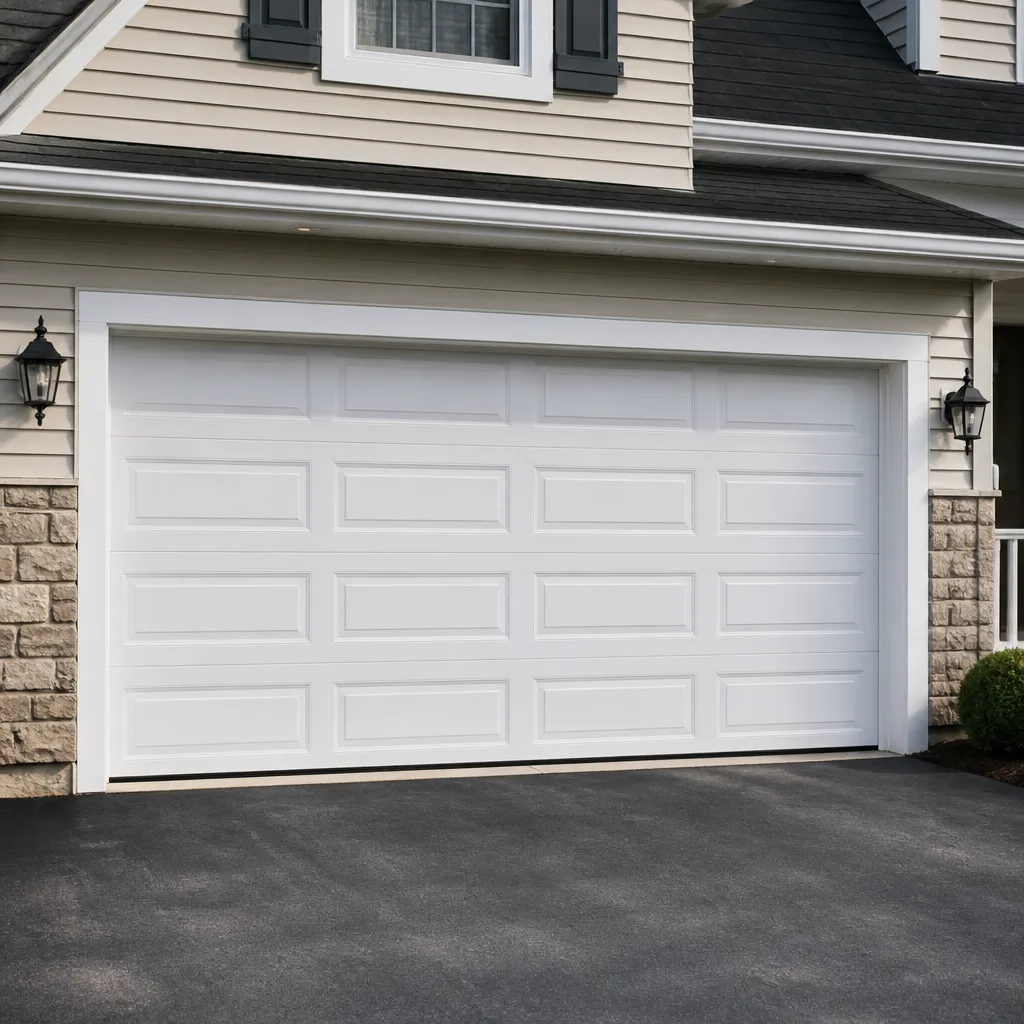 Raised-panel steel
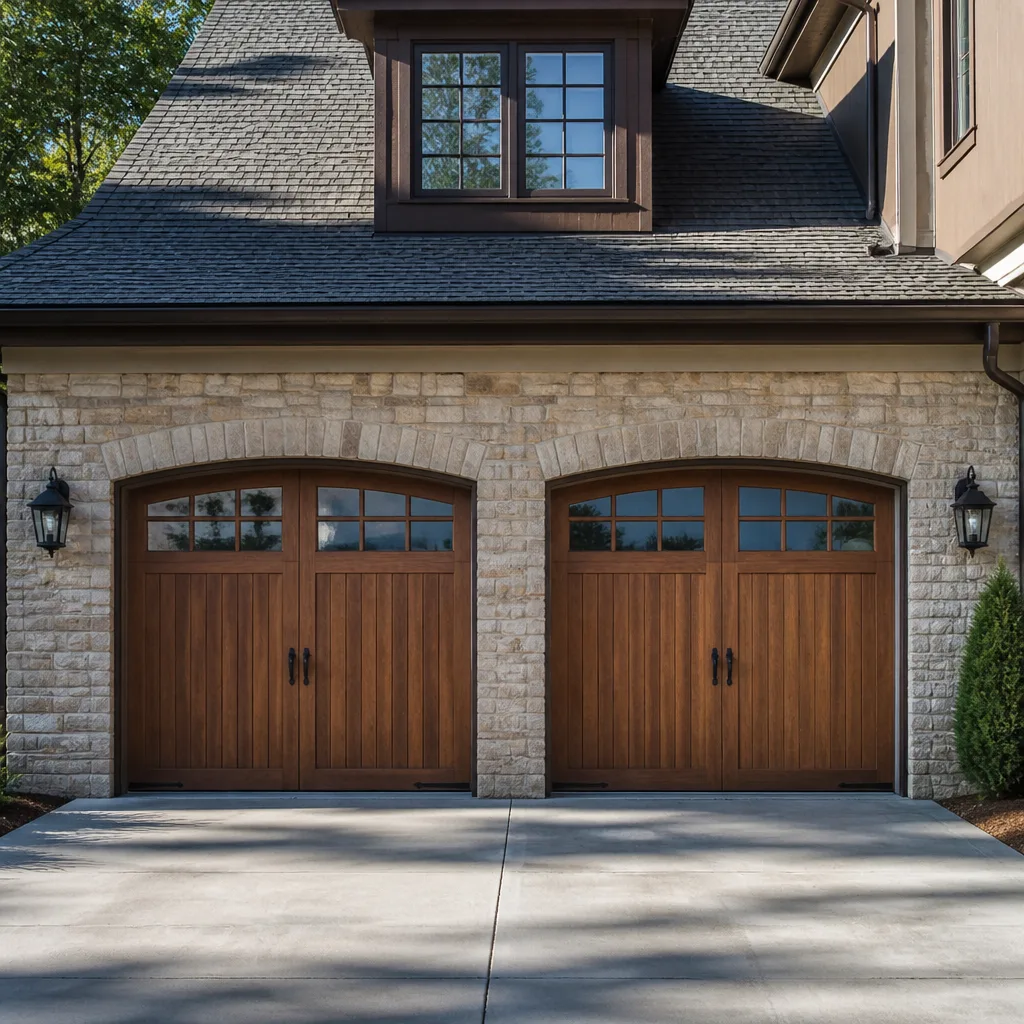 Carriage house
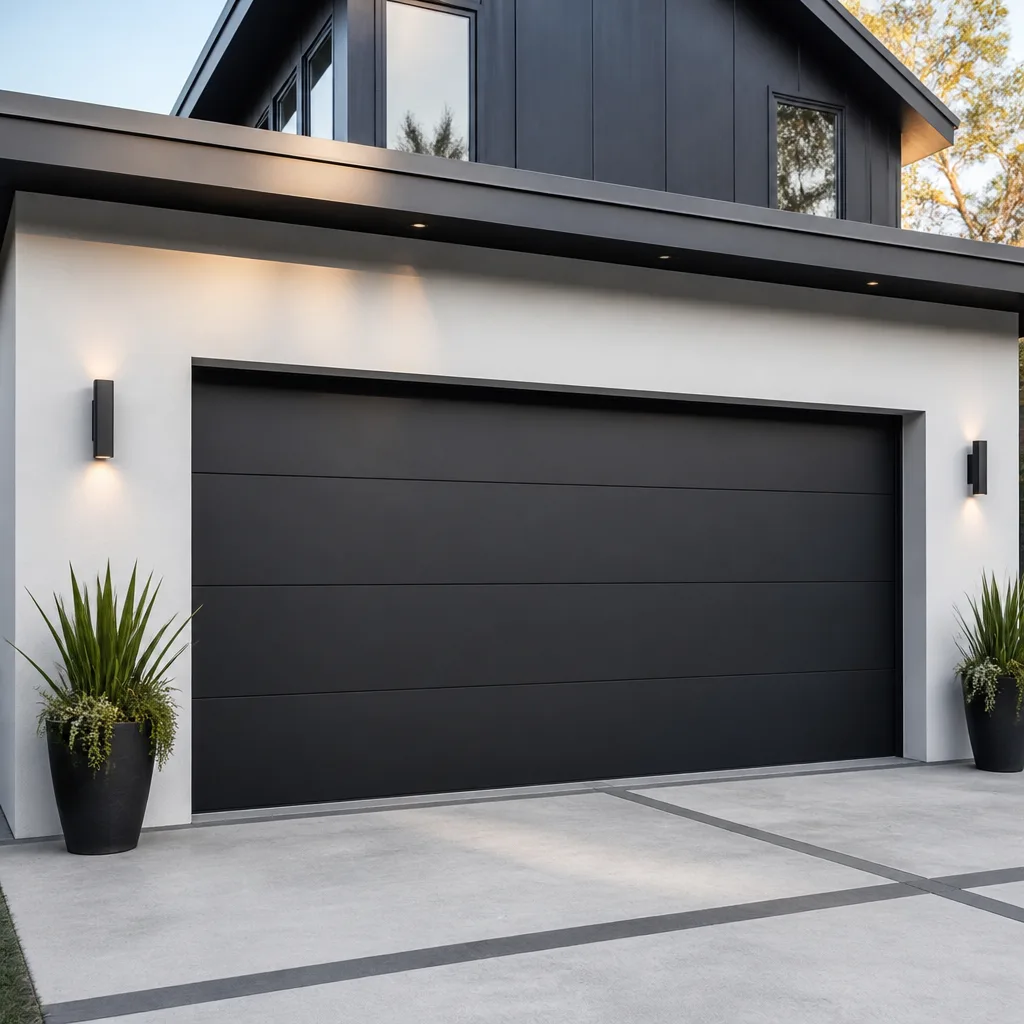 Modern flush
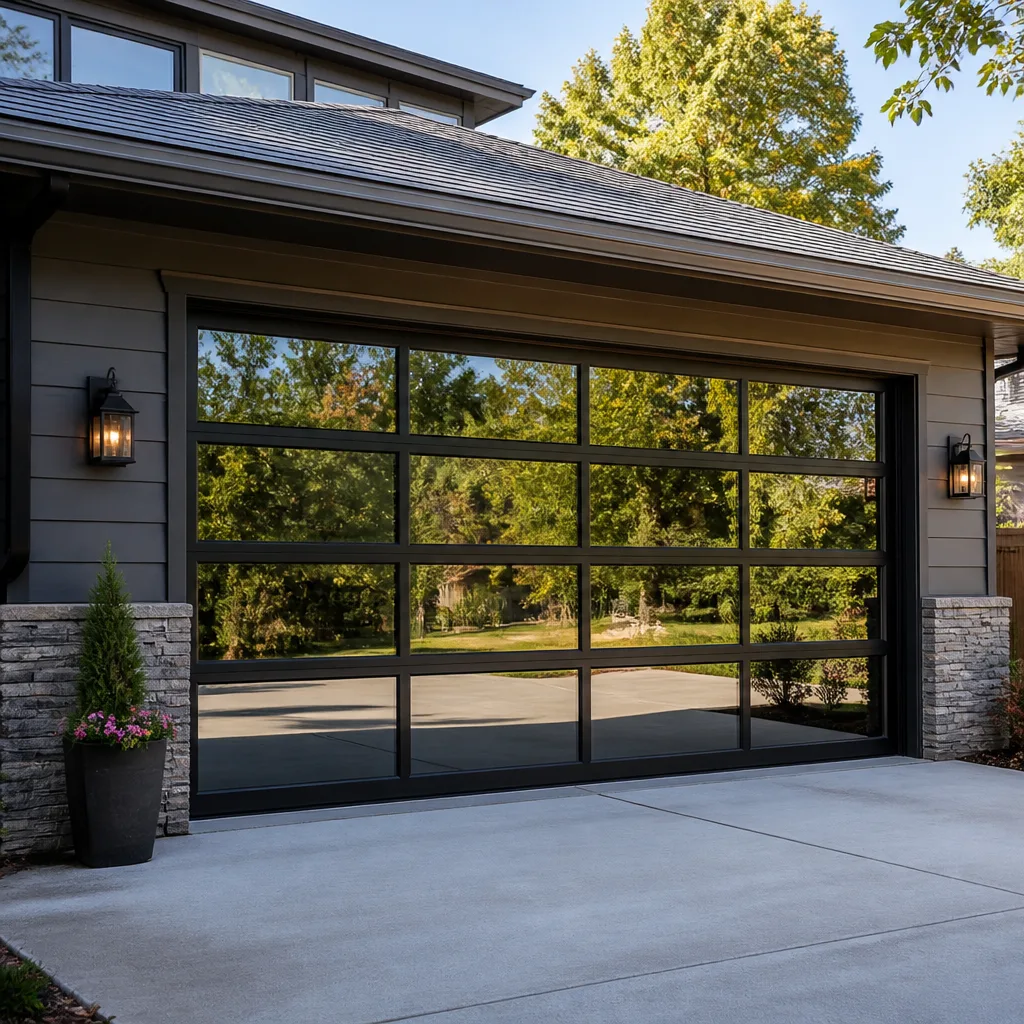 Full-view glass
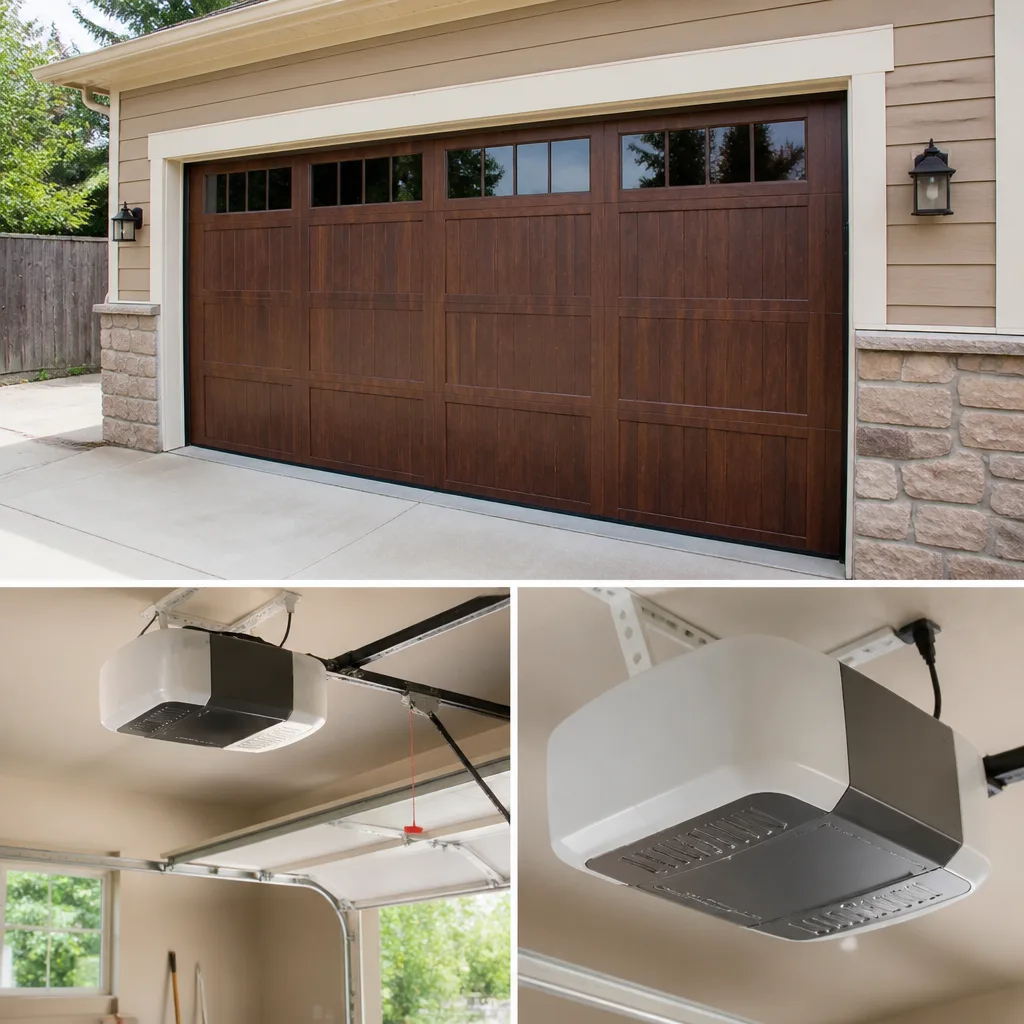 LiftMaster openers
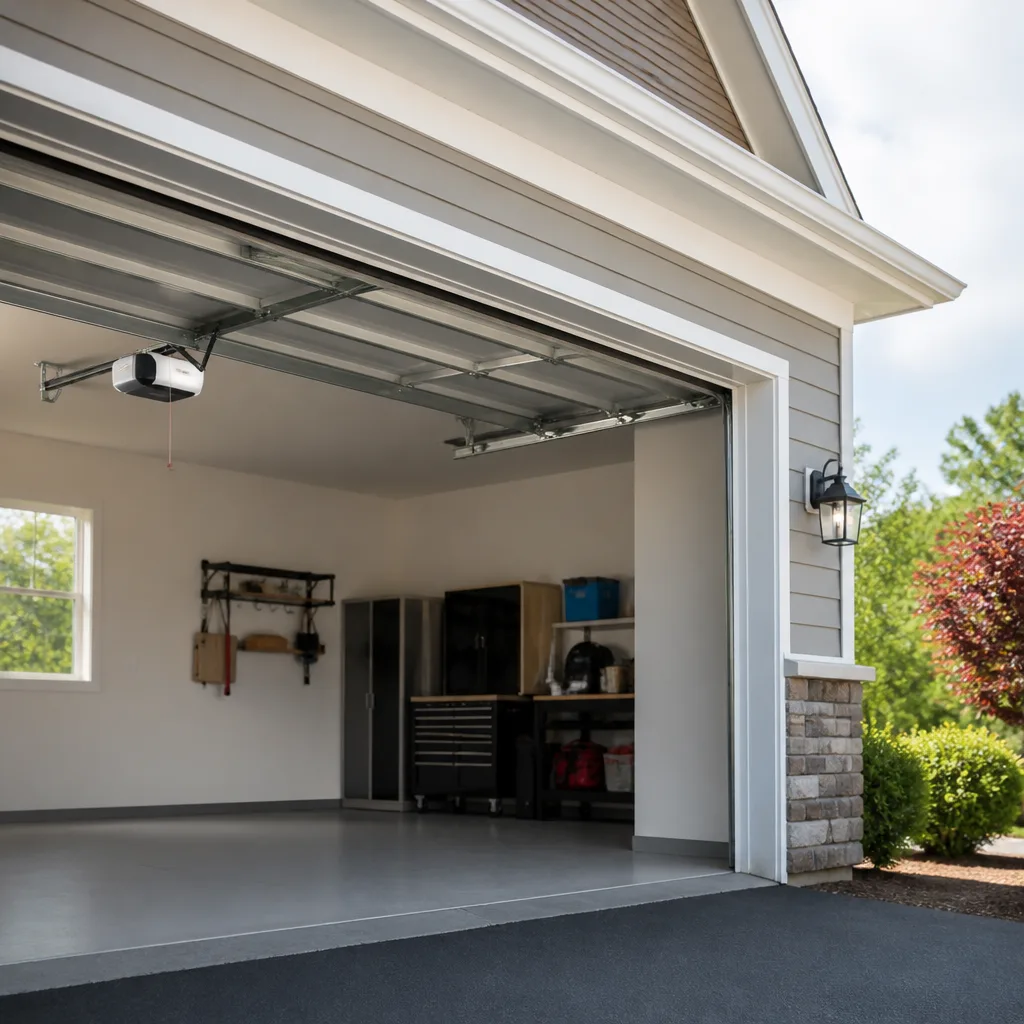 Chamberlain openers
Full 25-point door and opener safety check with every visit - springs, cables, rollers, tracks, and your LiftMaster or Chamberlain opener included
You get a price before we start. It does not change when the pro arrives.
Get your free estimateDIY vs Professional Garage Door: The The Villages Homeowner’s Decision Guide
Torsion springs store enough energy to cause permanent injury in under a second. That’s not a liability disclaimer. It’s a physics fact that should end the DIY conversation for a large share of garage door repairs before it starts. This guide is not written to sell you a repair, and it’s not written to keep you clicking. It draws the line the way it should be drawn: by injury risk and by the specific mechanical reality of torsion spring systems, not by difficulty labels. You’ll find a three-way task list (safe DIY, DIY with caveats, never DIY), the real cost of a failed repair, and the measurements to take before you decide. About half the jobs in The Villages are genuinely yours to do.
Quick Answer
Panels, seals, lubrication, opener programming, and most cosmetic work are safe for a capable homeowner to handle. Springs, cables, bottom brackets, and anything involving the torsion shaft require a trained technician, because the stored energy in a wound torsion spring is large enough to break bones or kill. If your door won’t open, is off its tracks, or the spring has snapped, call a professional: in The Villages, call (844) 628-1795 for a free estimate.
Styles & brands we work with
- Raised-panel steel
- Carriage house
- Modern flush
- Full-view glass
- LiftMaster openers
- Chamberlain openers
Table of Contents
- Where the Line Actually Sits
- The Three-Category Task List
- Why Springs Don’t Care How Fit You Are
- The Real Cost When DIY Goes Wrong
- The Tasks That Are Genuinely Straightforward
- Measure Your Setup Before You Decide
- How to Choose a Pro If You Hand It Off
- Making the Call: A Short Decision Process
Where the Line Actually Sits
Most DIY versus professional guides split the work into “easy” and “hard.” That’s the wrong axis. Difficulty tells you how long a job takes. Risk tells you what happens when it goes wrong. A torsion spring replacement isn’t hard, technically speaking. It’s a matter of winding a spring to a set number of turns with two winding bars, then securing it. A mechanically minded homeowner can understand every step. What that homeowner cannot do is convince the spring that it shouldn’t unwind in the wrong direction while their hands are near it.
So we use a different split. There are tasks where the worst case is a scratched panel or a crooked seal, and there are tasks where the worst case is a hospital visit. The second group is non-negotiable. The first group is yours whenever you feel like taking it on.
That distinction matters in The Villages for a specific reason. A lot of residents here are fit, capable, and experienced at fixing things. Many spent careers in engineering, construction, aviation, or the trades. That experience is real, and it’s useful for a lot of this work. It’s also the reason we hear the question at all. A physically capable homeowner looks at a snapped spring and thinks, “I’ve handled worse.” But the spring doesn’t evaluate your resumé. The energy stored in a wound torsion spring is the same whether the person unwinding it has forty years of trade experience or none. That’s the honest answer, and it’s the one most guides skip because it doesn’t sell anything and it doesn’t make good affiliate content.
Here’s what actually does change the calculus: the type of spring, the age of the hardware, the weight of the door, and whether the system has been maintained. Those factors affect how predictable a repair is. They don’t make spring work safer for a homeowner. We’ll get into each one.
The Three-Category Task List
This is the list we’d give a neighbor over the fence. Three groups, sorted by risk rather than by difficulty.
Category 1: Safe DIY
- Lubrication. Hinges, rollers, tracks, and the torsion spring itself (if you’re careful to lubricate the coil, not the winding hardware) benefit from a light application of a proper garage door lubricant a couple of times a year.
- Weather seal replacement. The rubber strip at the bottom of the door is a straightforward swap. So is the seal around the door frame.
- Panel painting and cosmetic touch-ups. Steel doors from Clopay or Amarr take paint well when prepped correctly. Cosmetic work has no mechanical consequences.
- Opener programming. Pairing a new remote, adjusting travel limits, and changing the opener light bulb are all done from the ground.
- Visual inspection. Looking over the rollers, cables, and spring for wear and reporting what you see. That costs nothing.
- Bracket tightening. Tightening a loose hinge screw or door handle bolt.
Category 2: DIY With Caveats
- Roller replacement. Doable from a stepladder with the door in the fully open position and the opener disconnected, but you must be sure the door is properly supported and you understand which rollers are under tension. If the door is older or the tracks are bent, call first.
- Opener logic board replacement. Some brands make this a plug-and-play swap; others don’t. On a Wayne Dalton or a Craftsman unit, replacement parts may not match the age of the unit, and getting it wrong can brick the opener.
- Track adjustment. Minor adjustments are okay. If a track is bent or the door is hitting the frame, don’t bend it back with your hands – that’s a professional frame read.
- Panel replacement (single panel on a sectional door). Possible for a careful homeowner on certain door models, but the panel has to match the specific model and the door has to be balanced first. Panel replacement twice-over is more common than we’d like.
Category 3: Never DIY
- Torsion spring replacement or adjustment. Full stop. The stored energy in a wound torsion spring is on par with a small explosive, and a slip is catastrophic.
- Extension spring replacement. Older Villages-style doors may have extension springs. They’re safer in some ways and more dangerous in others – they can fail explosively at the end of their life. This is still professional work.
- Cable replacement. Cables are under high tension and are the component most likely to whip loose and cut. Never handle cables on a door that’s under spring tension.
- Bottom bracket work. The bottom bracket holds the cable and the spring tension meets it. Never remove or loosen it.
- Balance and track reset after a cable snaps. The door will need to be re-cabled and re-balanced, and both require experience.
- Door off its tracks. A door that’s come out of the tracks has to be brought back down safely; forcing it causes panel damage and injury.
The quick test for any questionable task: does the repair require you to have your hands near a component under stored energy? If yes, that’s not a DIY job. If the worst thing that can happen is a crooked seal, it’s yours.
Why Springs Don’t Care How Fit You Are
Torsion springs do not gradually wear out the way most things do. They have a design life measured in cycles, they hold at rated tension, and then one day they fail. There’s no slow leak, no squeal, no warning. A torsion spring can hold for thousands of open-close cycles and then fail on a Tuesday morning as the door starts up. That’s what makes them different from almost every other mechanical system a homeowner manages.
The reason springs go wrong at the hands of homeowners isn’t strength. It’s that the failure mode is not compatible with a human body being in the wrong place. The energy in a wound torsion spring is measured in foot-pounds, and when it releases unexpectedly the shaft, the winding bars, and the spring itself become projectiles.
Physically capable homeowners are not safer near an unwinding torsion spring. They are more able to lift a heavy door off someone who has been hurt, which is a different scenario entirely. And Villages homes have a specific combination that raises the stakes: many have wide, heavy steel doors – some Clopay, Amarr, Wayne Dalton, or older Craftsman models – and a garage that’s in daily use. Heavy doors need higher-tension springs. Higher tension means more stored energy.
The number of times we’ve been called to undo a homemade spring repair is not small. The pattern is almost always the same. Everything looks fine right until it doesn’t. What does change the risk calculus: spring type, age, and manufacturer. A professional can tell you what you’re dealing with at a glance. That’s a five-minute conversation worth having before you decide anything.
The Real Cost When DIY Goes Wrong
You won’t find “the average homeowner spends $X on a failed DIY repair” in this guide. Those numbers are invented and we don’t publish invented numbers. What we can tell you is what a failed repair typically involves in The Villages, which is more useful anyway.
When a homeowner has attempted spring work and it hasn’t gone well, here’s what the job usually becomes:
- A correction estimate, then the original repair. The shop has to be re-balanced, the old winding hardware inspected, and any damage from a partial release sorted before the actual replacement can happen. That’s two jobs, not one.
- Replacement of parts, not just repair. If a spring, winding bars, or the torsion shaft came loose under tension, parts that would have been reusable are frequently now scrap.
- Panel damage. If a door drops or comes off its tracks, panel replacement is often the next step. That’s a much bigger job than a spring repair, and on a discontinued door model it can be hard to source.
- Opener damage. An opener that tries to move a door with a snapped or unbalanced spring tends to burn out the motor or ruin the logic board. We handle garage door opener repair regularly and a disproportionate share of it traces back to a door that was running under a failed spring.
The price of a professional repair is the price of the job, and it’s quoted and agreed before anyone starts. The price of a failed DIY repair is unpredictable. That’s the core cost argument, and it doesn’t require a scary number to make it.
The Tasks That Are Genuinely Straightforward
Here’s the part of the conversation the DIY side usually does properly, and we don’t want to shortchange it. Nearly half of what a garage door needs in The Villages is work a confident homeowner can do with a stepladder and a couple of tools, safely and correctly.
Lubrication
Garage door rollers, hinges, and tracks benefit from a light coat of a proper garage door lubricant twice a year. Do not use WD-40 (the classic formulation) – it attracts dust. Use a specific garage door lube, which sets up as a light film. Spray the torsion spring coil lightly. Wipe the tracks clean and apply a thin coat. This is a twenty-minute job and it adds real life to the door.
Weather Seal Replacement
The bottom rubber seal degrades faster in a warm, humid climate like central Florida than in colder parts of the country. A cracked seal at the bottom of the door lets in water, dust, and the occasional lizard. The replacement process is straightforward: pull the old rubber out of the retainer, slide the new one in, close the door against a flat surface to seat it. Replacing the frame seal around the door perimeter is similarly direct.
Panel Painting
On a steel door from Clopay or Amarr, repainting is a standard homeowner project. Prep matters – scuff the surface, wash it, prime for the metal, then paint. The door’s operating mechanism doesn’t care. If you decide to repaint, we recommend doing at least one panel at a time so the base coat can dry properly and you aren’t working with the door in an awkward position.
Opener Programming
Pairing a new LiftMaster or Chamberlain remote, adjusting the opener’s travel limits, setting the light timer, and clearing memory are all in the manual and all done from the ground. Most openers manufactured in the last two decades have a learn button and an LED indicator. If the opener is older than that, the remote or the logic board may no longer be available, and that’s the point where a call makes sense.
Visual Inspection
Get into the habit of looking at the door once a month. Look at the spring (is the coil cracked or separated?), the cables (are they frayed or kinked?), and the rollers (are they chipped or worn flat?). Report what you see to whoever handles the repair. A homeowner who can describe what’s wrong on the phone saves a diagnostic step and often gets a better first estimate.
All of this is work a resident of The Villages can do. The category list above is the answer to “how much of this can I actually manage?” for most homes.
Measure Your Setup Before You Decide
Before you pick up the phone or pick up a wrench, figure out what you actually have. This is the step most homeowners skip and the one that most often changes the decision. Here’s how to evaluate your setup in about ten minutes.
1. Identify the spring type
Torsion springs sit above the door, running horizontally across the top. Extension springs run along the tracks on either side. Torsion is more common on modern doors. Extension springs are more common on older homes or on doors above a certain width. Look at the door’s top half and find the spring – it’s the tightly wound coil. If you have two springs mounted side by side on a single shaft, you have a matched set. If you see two long springs running parallel along the horizontal tracks, you have extension springs. That difference matters enormously for risk. Both are professional work, but extension spring failure looks different, and a pro will want to know which you have before quoting.
2. Measure the door’s width, height, and thickness
Use a tape measure on the inside of the door. Width, side to side. Height, top to bottom. Thickness, most doors are 1 3/8″ or 2″. These three numbers determine door weight. Door weight determines spring tension. Spring tension determines how much stored energy you’re standing next to. Write the numbers down. Any professional you call will ask for them.
3. Check headroom clearance
Look at the gap between the top of the door and the garage ceiling above it. Torsion springs need a certain amount of headroom. Low headroom changes the spring configuration and sometimes adds cost to a repair. Measure it before making a call so you know what to expect.
4. Note the make and model if you can find it
Door manufacturer and model are usually on a sticker on the inside of a panel or on the door’s edge. The brand matters: Clopay, Amarr, Wayne Dalton, and Craftsman all have different parts availability and different spring specs. Write down anything you can read on the label. Even a partial model number helps when a technician arrives and shortens the estimate conversation.
5. Look for signs of wear
Cracks in the torsion spring, frayed cables, worn rollers, rust at the weld points, a door that’s difficult to lift by hand (test with the opener disconnected and the door lowered – if it takes real effort, the springs are tired), any screws missing from a hinge. Photograph what you see. A photo often answers a phone estimate in a way a description can’t.
Once you’ve done this, you’ll know which category your job falls into. If it’s a spring, cable, or bottom bracket, you’ve already got your answer. Call The Villages Garage Door Repair Pros or another specialist. If it’s a seal, a panel, or a programming problem, you’ve got a Saturday project on your hands.
How to Choose a Pro If You Hand It Off
If the job lands in the “never DIY” or “DIY with caveats” groups, the next question is how to pick who does it. The garage door trade is full of generalists who’ll take a garage door job as filler between other work. We’d suggest asking four questions before booking anyone in The Villages.
- Do you work on garage doors as your only trade? A specialist knows the spring math on a Clopay or Amarr door without looking it up, and has the right tools. A generalist may not. Nothing against a competent handyman, but a torsion spring isn’t a handyman job.
- Are you certified to work on the brand I have? If you have a LiftMaster opener and a Wayne Dalton door, the shop should be able to say yes without hesitation. Multi-brand fluency in a specialist covers eight major brands, and that’s the baseline. If a shop only does “all brands” in the abstract, ask them for specifics.
- Do you quote before you start? The estimate should be written, itemized, and agreed before anyone puts a wrench on the door. Never accept a phone number as a quote, and never let a repair start before you’ve seen the estimate.
- What’s the response window for an emergency? A door that won’t open is sometimes a security problem, not a convenience problem. A specialist that handles emergency calls will tell you how quickly they can realistically get someone out. Fast dispatch from 7am to 7pm, Sunday through Friday, is the specific promise to ask about.
We handle garage door spring repair every week in The Villages, and the shops that pass these four questions are the ones that end up doing the work right. The ones that don’t usually end up with a second repair call in a few months. Our approach to garage door repair is the same: diagnose, quote, then repair. Nothing starts before the price is agreed.
Making the Call: A Short Decision Process
If you’re still unsure after reading the task list and taking the measurements, here’s a way to decide in five minutes.
- Watch the door open and close once. Does it run smoothly, or does it shudder, sag on one side, or stop halfway? Shuddering is a balance issue. Call a pro.
- Pull the opener release and lift the door by hand. It should lift smoothly and stay up with modest effort. If it takes more than moderate effort, or it drops when released, the springs are tired or the balance is off.
- Look at the spring. Any crack, separation, or visible gap in the coil means the spring has failed or is about to. Do not touch it. Call.
- Listen for noise. Squeaks are usually lubrication, and that’s your job. Grinding is worn rollers, hinges, or a bearing plate, and that’s a professional call.
- Check the door’s age and the hardware’s condition. If the door is old and the tracks or rollers are heavily rusted, the door is due for more than a tune-up. A pro will tell you whether to repair or replace.
If the door fails the first four, you’re done deciding. If it passes and the job is cosmetic or maintenance, it’s yours.
Common Mistakes to Avoid
- Trying to lift a door that won’t move with its springs still under tension. A door that’s stuck or off track isn’t a lifting problem, it’s a spring or cable problem. Forcing it damages panels, tracks, and the opener, and is a genuine injury risk.
- Replacing one spring of a matched pair. If the door has two torsion springs side by side, they were installed at the same time and have the same cycle count. Replacing only one leaves the other spring at the end of its life, and it will fail. Both springs get replaced together. If you’re pricing a repair, price the pair.
- Using WD-40 on rollers and tracks. It’s not a lubricant for garage doors, and it attracts grit. Use a proper garage door lube. This is one of the most common and most fixable homeowner mistakes in The Villages.
- Buying an opener from a big-box store and installing it yourself if the door isn’t balanced. A new opener installed on a door with a failing spring will burn out the unit. Balance comes first, opener comes second. Every time.
- Painting the door with the hardware still on. Spray paint and roller edges stick to rollers and hinges and make future replacement harder. Remove or tape around the hardware. A panel that comes out nicely looks like a panel that comes out nicely, not a panel that was spray-painted in place.
- Missing the model number on a door. If the panel has been discontinued, matching a replacement can be difficult or impossible. Finding the model number before you need a panel saves a lot of grief. It’s a sticker inside the door, and there’s a lot of value in finding it.
- Calling a general handyman for a spring job. A handyman who “can do that too” is a handyman who may not have the training. A specialist is the right call.
- Not testing the safety reverse. On every opener, the door should reverse when it meets an obstruction. On a LiftMaster or a Chamberlain, this is a simple test with a 2×4 on the ground. If it doesn’t reverse, that’s an opener adjustment, and it’s something a homeowner can do – or a professional can set with the safety check.
See the difference
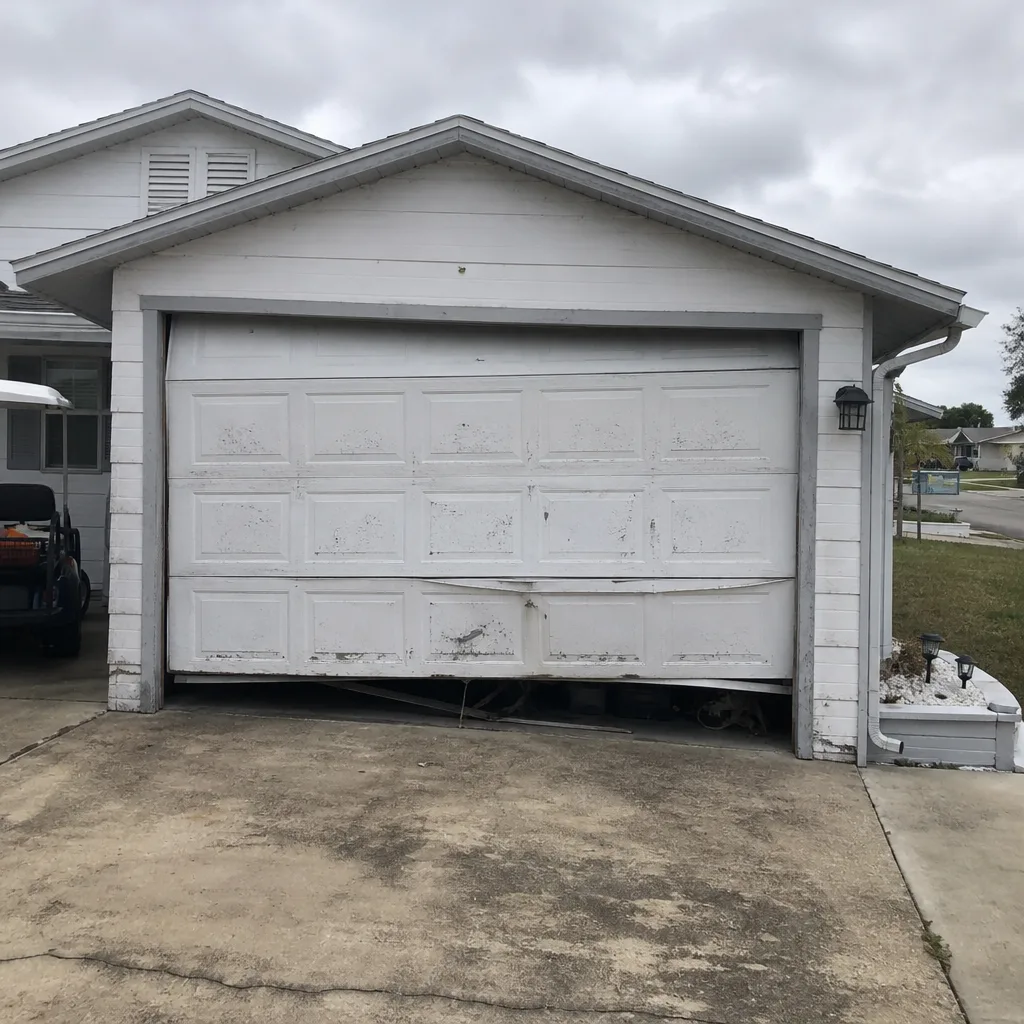 Before
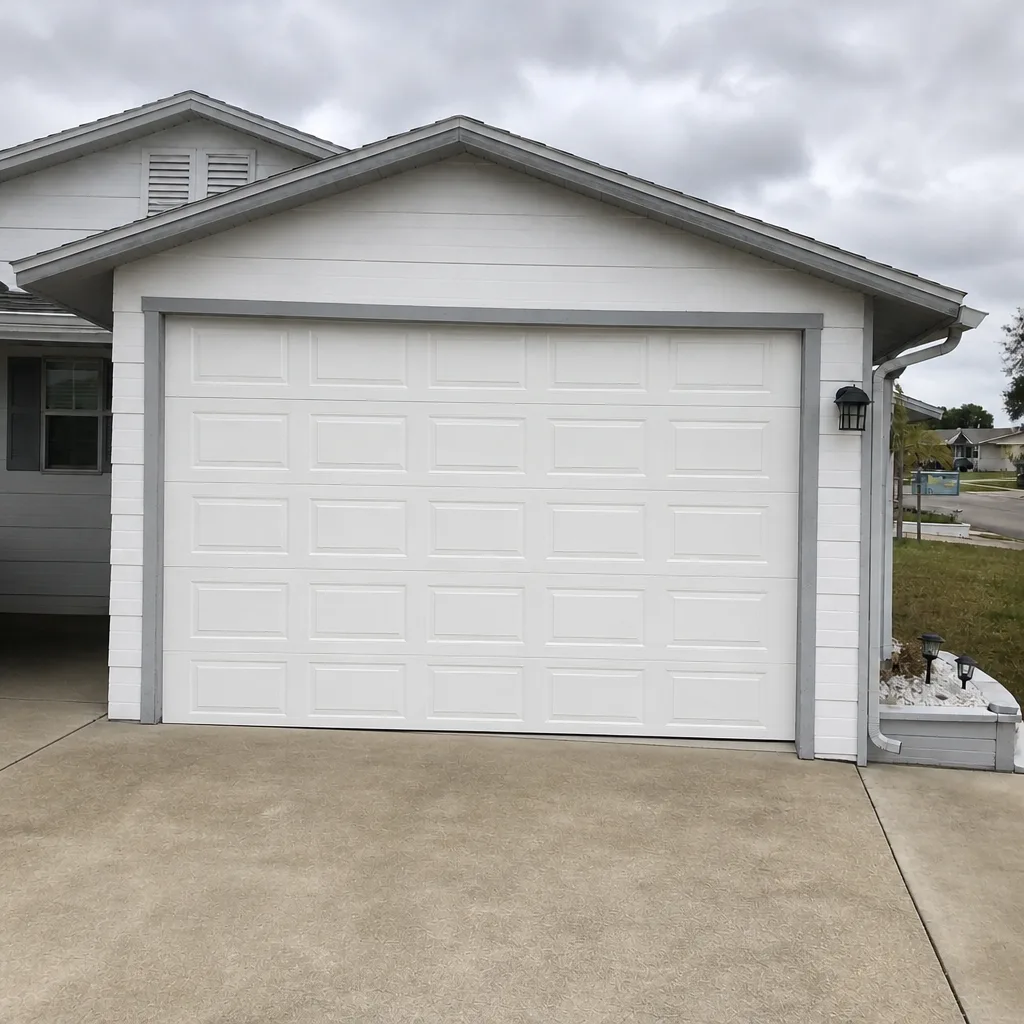 After
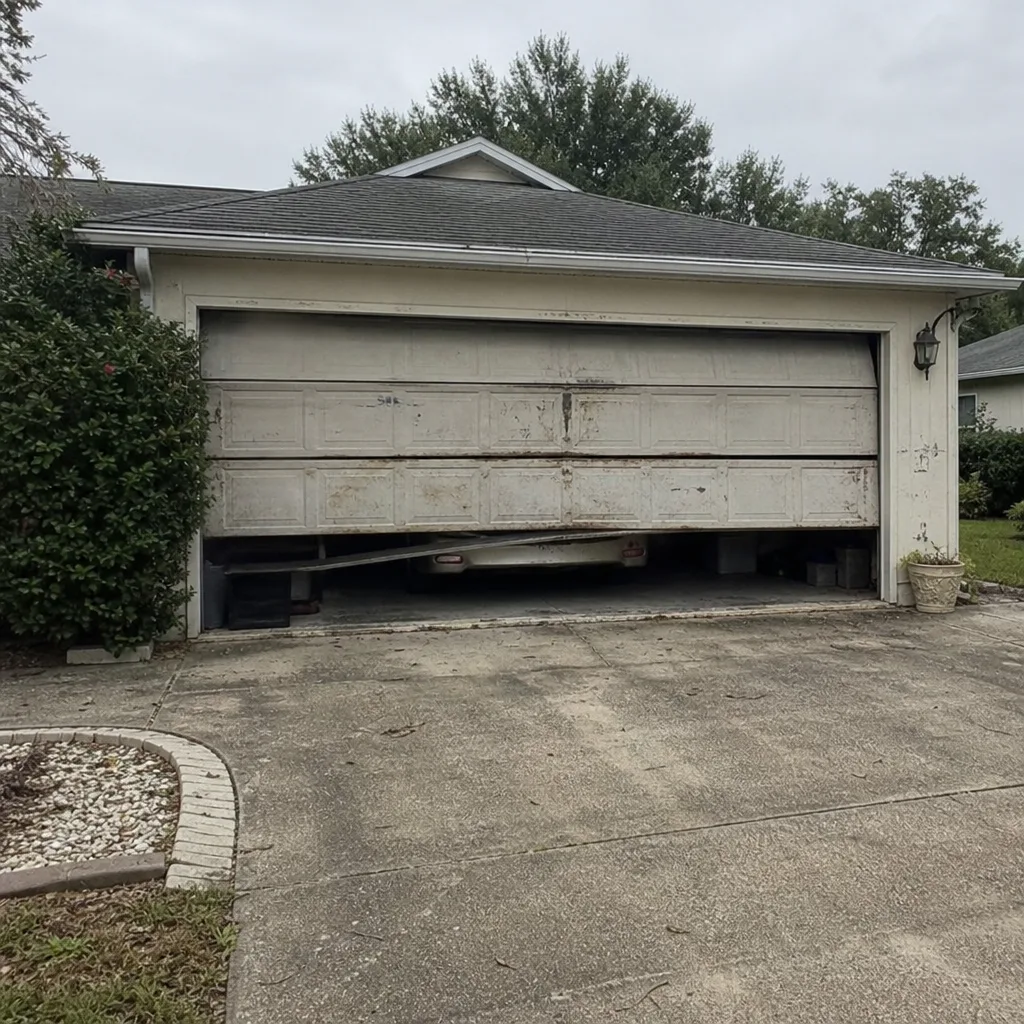 Before
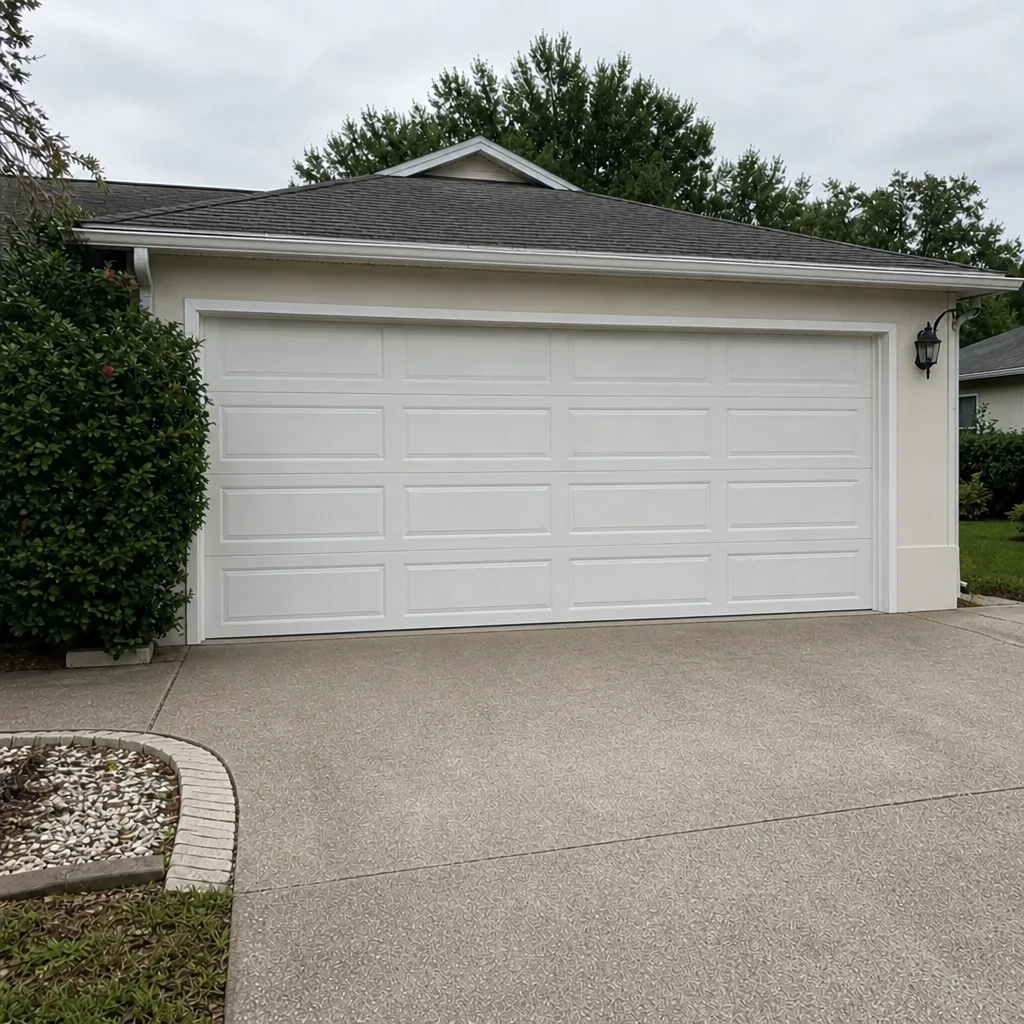 After
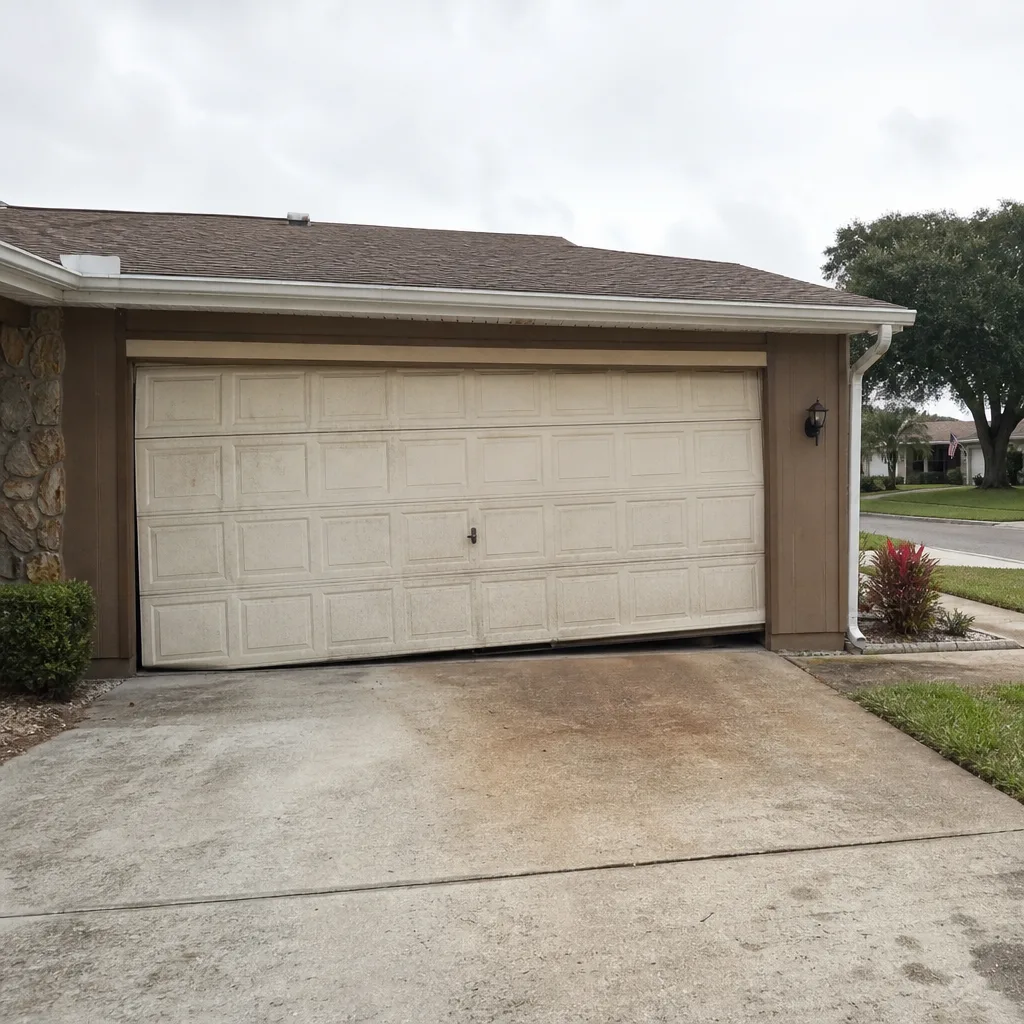 Before
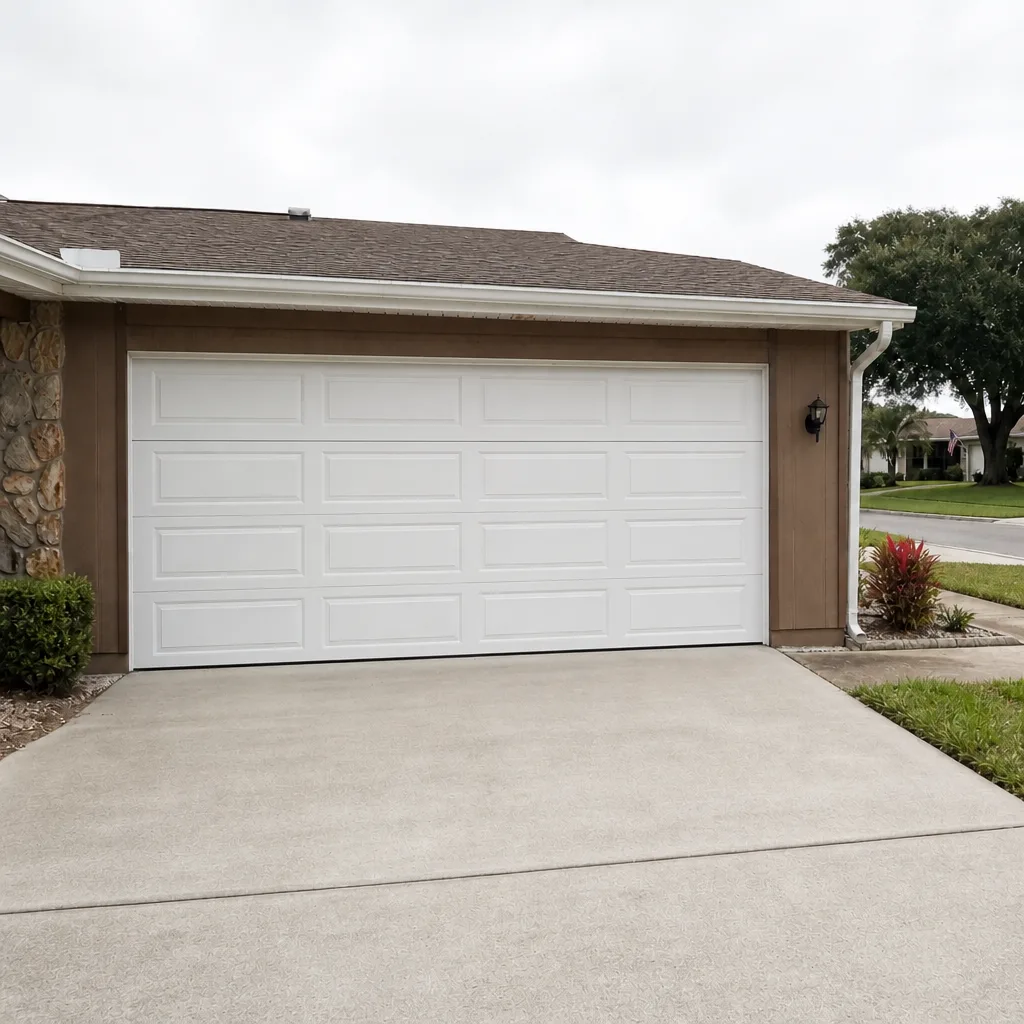 After
When to Call a Professional
Call a professional the moment the door involves stored energy you can’t see: a torsion spring, an extension spring, a cable, a bottom bracket, or a door that’s off its tracks. Call if the door is running unevenly, if the opener has stopped recognizing the door’s position, if a panel has come loose and the door won’t close squarely, or if you’ve had any prior repair you aren’t confident in. A homeowner’s physical fitness doesn’t change the answer when the risk is stored energy in a spring. The Villages Garage Door Repair Pros offers free estimates in The Villages – call (844) 628-1795. We work on the brand you already have: Clopay, Amarr, Wayne Dalton, Craftsman, and the four other major brands. Spring replacement done right, done safely. When the door won’t move, we do. One call covers it – repair, opener, or full installation.
Frequently Asked Questions
No, not safely. Torsion spring replacement requires winding a spring to a precise tension and the potential energy involved can cause serious injury in a fraction of a second if something slips. The physical fitness of the homeowner doesn’t change that risk. Torsion spring replacement is a professional job every time.
Most spring repairs in The Villages typically fall into the range of one professional spring replacement being quoted per spring rather than per door, because a matched pair is normally replaced together. The written estimate sets the final price, and it’s quoted and agreed before any work starts. For the exact price on your door, call (844) 628-1795 – estimates are free. We answer 24/7 and dispatch runs 7am to 7pm, Sunday through Friday.
Yes, in almost every case. Remote pairing on a LiftMaster, Chamberlain, Genie, or Craftsman opener is a push of the learn button and a press of the remote button, all from the ground. The manual for your specific model lists the exact steps. The exception is an older opener where the documentation is gone or the remote format is no longer manufactured – in that case a call will save you time.
The torsion spring. After that, the cables and the bottom brackets. All three involve stored energy or high tension that can release without warning. If a repair involves any of those components, it belongs with a professional every time.
Stop working on the door and don’t force it open or closed. Don’t try to lift a door that’s off its tracks or stuck against a broken spring. Call a specialist. The Villages Garage Door Repair Pros handles these correction jobs directly, and we quote the diagnosis and correction in a single written estimate before any work starts.
Replacing a remote, programming the travel, or swapping a light bulb is a homeowner job. Installing a new opener on a door that isn’t balanced is not – it will damage the opener and the door. If the opener is being replaced or the door isn’t running smoothly, let a technician handle the balance and the opener as one job. If the door is in good shape and the opener is a direct replacement for the same model, a capable homeowner can often do the swap from the manual.
The Bottom Line
Most of what a garage door needs is a homeowner’s job: lubrication, weather seals, painting, programming, and inspection. The dangerous work – springs, cables, brackets, and anything where stored energy is involved – is professional work, full stop, and the physical capability of the homeowner doesn’t change that. Before you decide, identify your spring type, measure the door, and check the headroom. If the door needs spring work or isn’t running smoothly, one call to a specialist covers repair, opener, or full installation. The Villages Garage Door Repair Pros is a garage door specialist, not a general contractor, and our technicians have up to 13 years of experience. Call (844) 628-1795 for a free estimate. We answer 24/7. Fast dispatch from 7am to 7pm, Sunday through Friday.
Written by the team at The Villages Garage Door Repair Pros.