
Last updated November 21, 2026
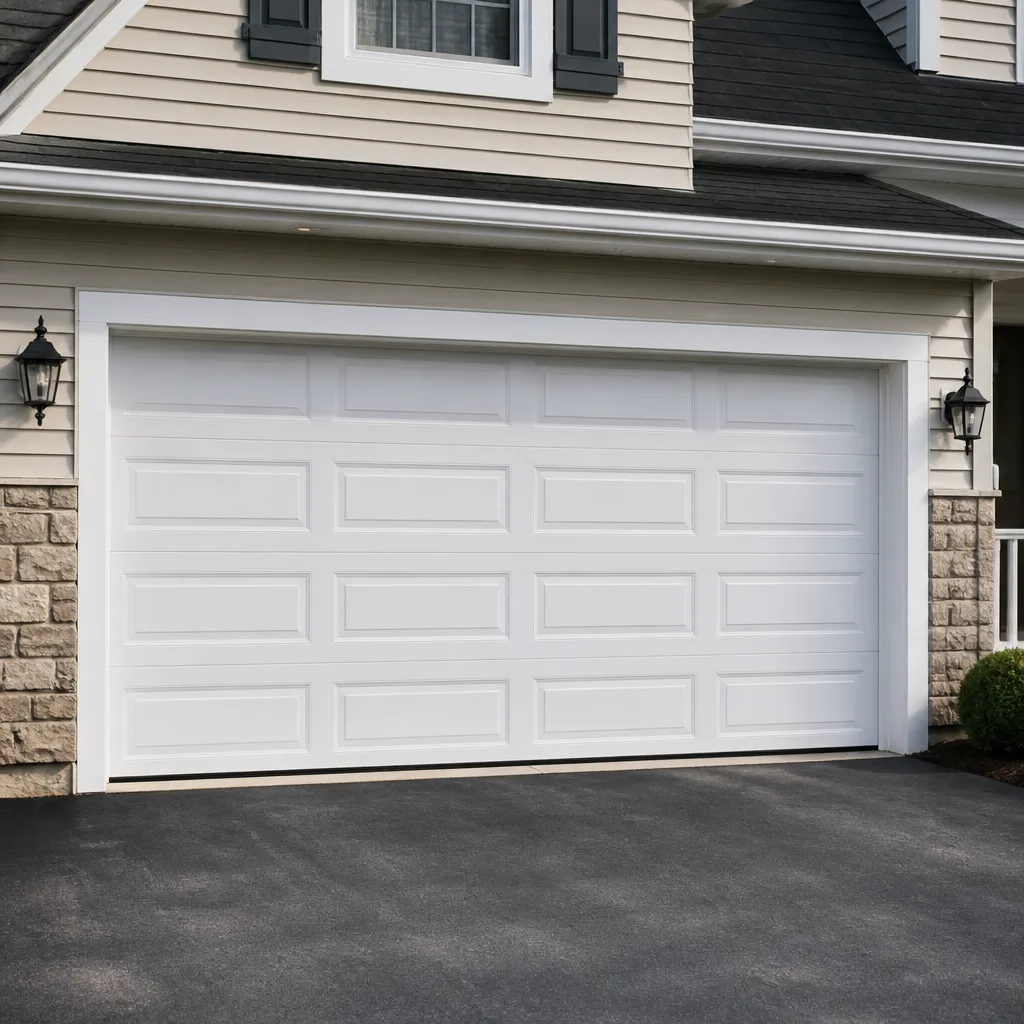 Raised-panel steel
 Carriage house
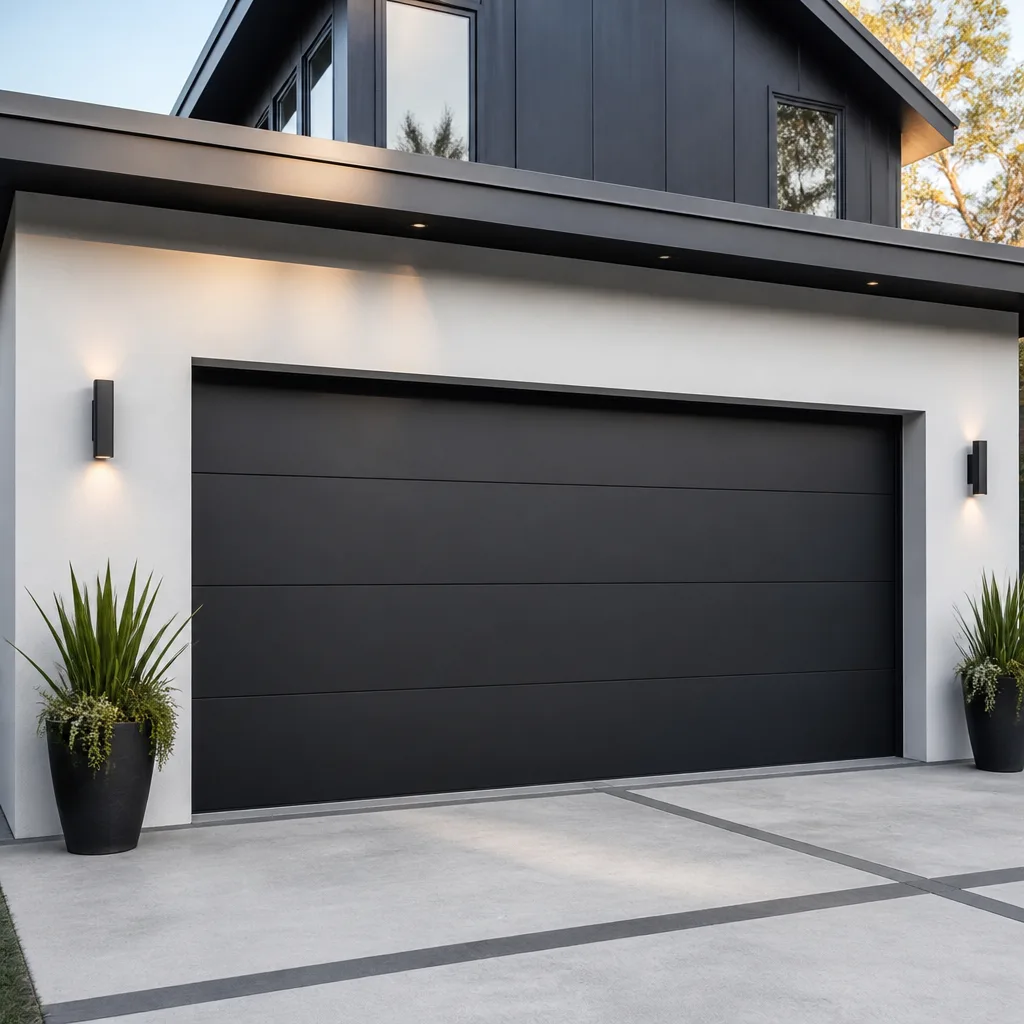 Modern flush
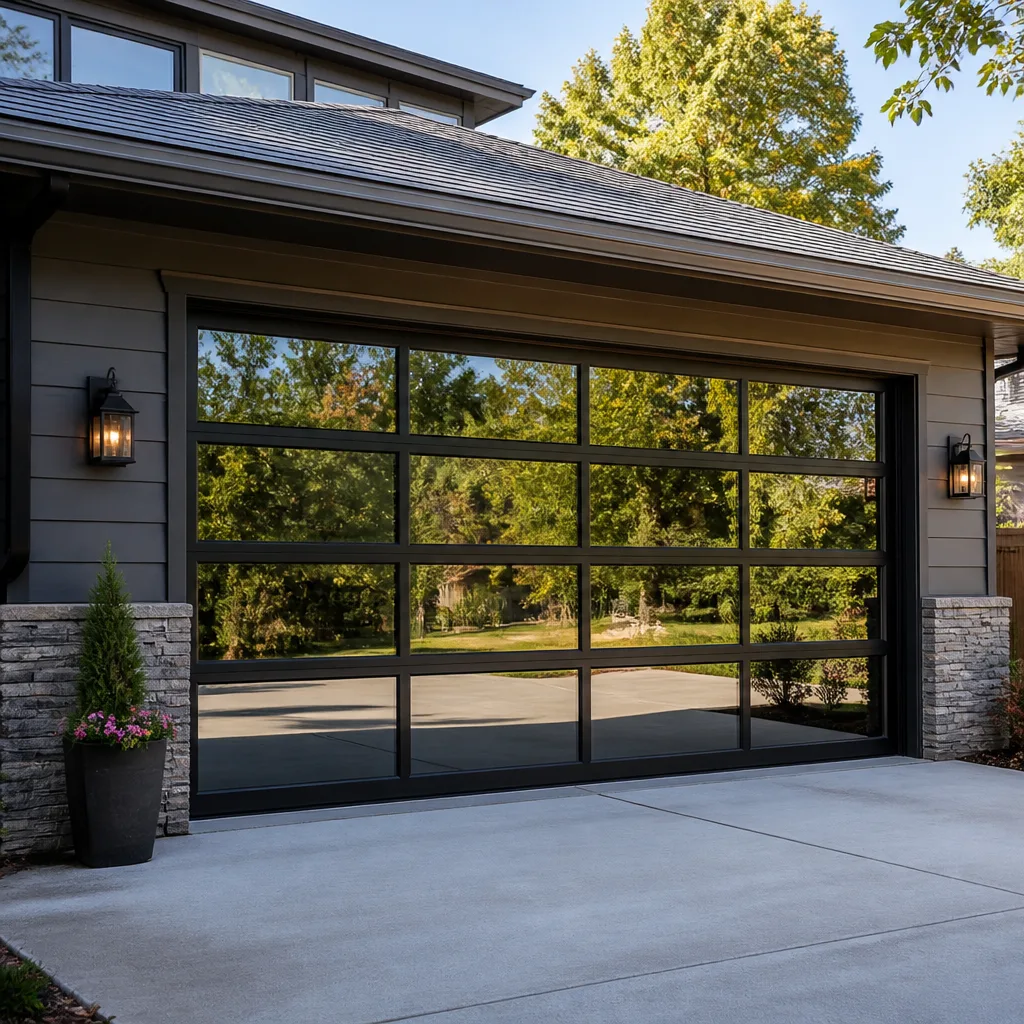 Full-view glass
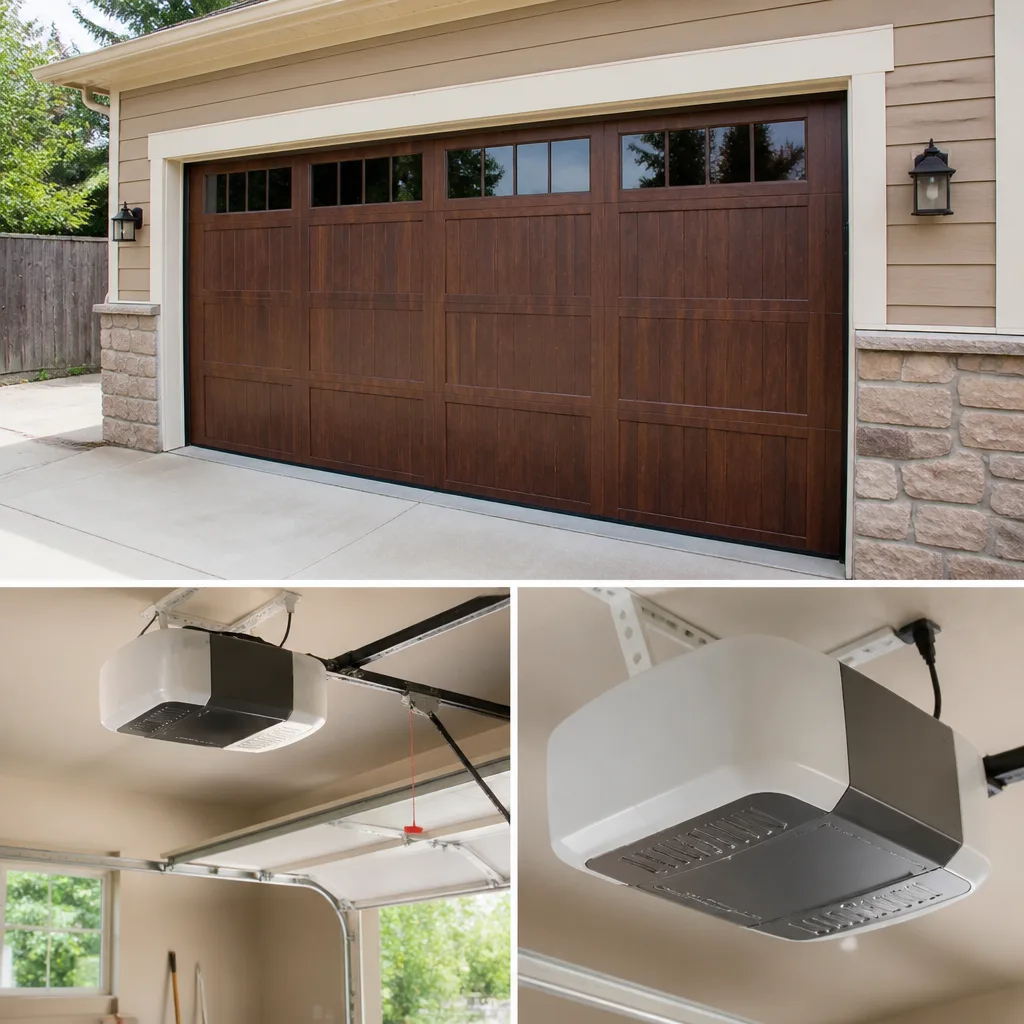 LiftMaster openers
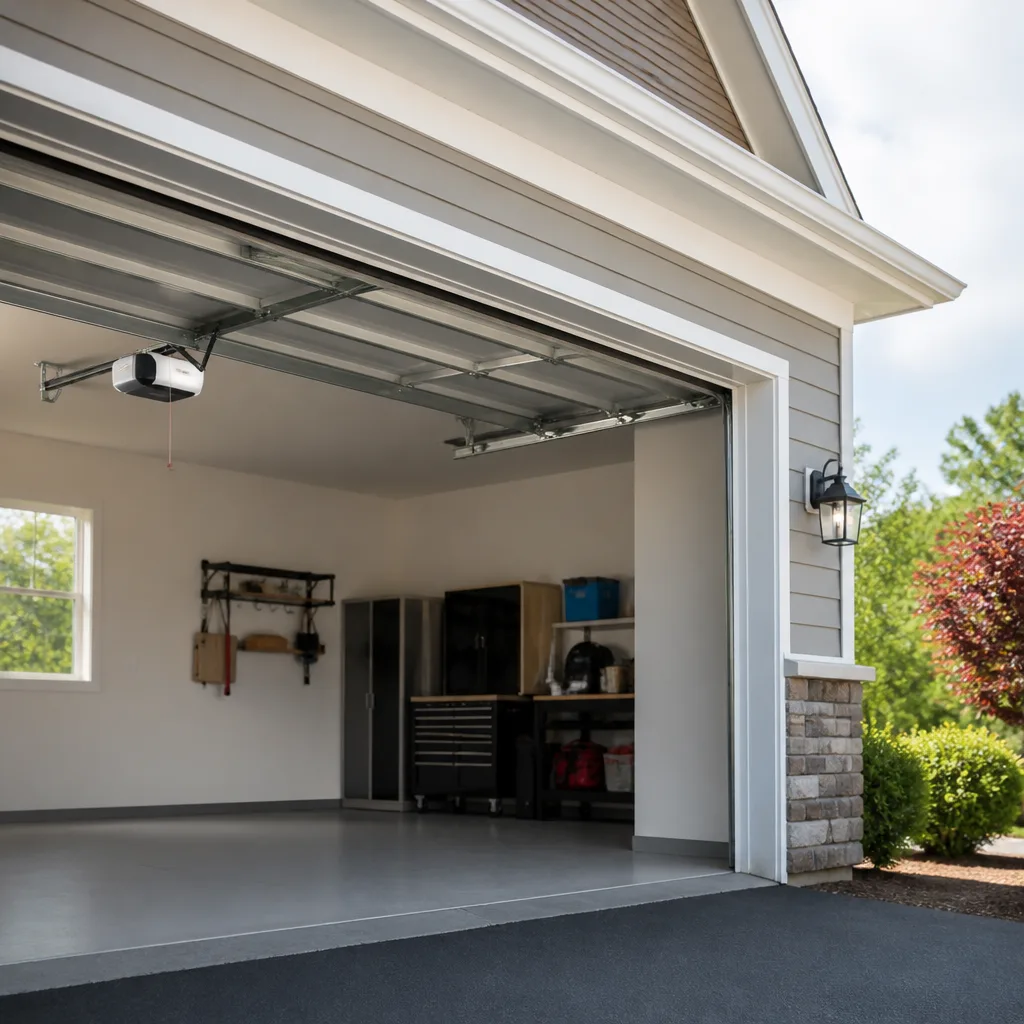 Chamberlain openers
Full 25-point door and opener safety check with every visit - springs, cables, rollers, tracks, and your LiftMaster or Chamberlain opener included
You get a price before we start. It does not change when the pro arrives.
Get your free estimateGarage Door Repair Maintenance Checklist for The Villages Homeowners
Most garage door maintenance advice assumes a door that opens twice a day and then sits quiet until evening. In The Villages, that assumption breaks down. Many residents are home all day, run errands by golf cart, host family, and stay active, so the same door cycles far more often than the national average. Springs, rollers, and openers wear on cycles, not on the calendar, which means a checklist built for a working commuter’s schedule won’t protect a door in The Villages. This guide lays out a cycle-adjusted maintenance routine: what to check, how often, which products survive Florida heat, and how to log it all so any technician can pick up where you left off. We’ll keep it practical.
Quick Answer
A garage door maintenance checklist for The Villages should be built around actual daily cycles, not a fixed calendar. Check the balance, springs, rollers, hinges, tracks, weather seal, and safety reverse every quarter if your door cycles 8-10 times a day, and lubricate high-use moving parts monthly with a silicone- or lithium-based product that won’t collect sand. Log each inspection so wear patterns stay visible and any technician inherits an accurate history.
Styles & brands we work with
- Raised-panel steel
- Carriage house
- Modern flush
- Full-view glass
- LiftMaster openers
- Chamberlain openers
Table of Contents
- Why Your Cycle Rate Matters More Than the Calendar
- The Quarterly Inspection: A Step-by-Step Walkthrough
- Lubrication That Holds Up in Florida Heat and Sand
- Bottom Weather Seals and Paver Driveways
- Rust and Corrosion Checkpoints for Humidity
- Springs and Cables: What to Check, Not What to Touch
- Building a Quarterly Log You Can Hand Off
- Common Mistakes to Avoid
Why Your Cycle Rate Matters More Than the Calendar
A garage door spring is a fatigue component, and fatigue is counted in cycles. Every open-and-close is one cycle, and most springs are rated for a set number of them. A household that cycles the door three to five times a day and a household that cycles it eight to ten times a day are putting very different loads on the same hardware. Run the math and the difference is stark: doubling daily use roughly halves the number of years a spring will last before it needs replacement.
That’s the central adjustment a Villages homeowner needs to make to any generic checklist. The advice to “inspect twice a year” is written for a commuter household. If you’re home all day, in and out by golf cart, opening the door for deliveries, family visits, and daily activity, your door is closer to a commercial duty cycle than a residential one. The fix isn’t complicated. It’s a matter of shortening the interval between inspections and lubrication.
- Low use (2-4 cycles daily): inspect twice a year, lubricate every other month.
- Average use (5-7 cycles daily): inspect every quarter, lubricate monthly.
- High use (8-10+ cycles daily): inspect every quarter and watch spring and roller wear closely, lubricate monthly.
The same logic applies to your opener. Motors, gears, and drive belts all accumulate wear with use, so a LiftMaster or Genie unit that runs ten times a day will reach its service intervals sooner than the manual’s calendar suggests. If your opener is making new noises or reversing on its own, that’s a sign to look at garage door opener repair before the problem grows.
The Quarterly Inspection: A Step-by-Step Walkthrough
Set aside twenty minutes once a quarter and work through the door methodically. Do this with the door closed and the opener disconnected, so nothing moves while you’re inspecting and nothing surprises you. Here’s the order we recommend, from the top of the door to the floor:
- Disconnect the opener. Pull the release cord so the door operates by hand. This is the safest way to test balance and listen for grinding.
- Test the balance. Lift the door halfway and let go. A well-balanced door stays roughly where you put it. One that drops or rises on its own is telling you the springs are out of adjustment or near the end of their life.
- Look at the springs. With the door closed, examine the torsion spring above the door or the extension springs along the sides. You’re looking for visible gaps, stretched coils, or a two-piece spring that’s come apart. Don’t touch them; just note what you see.
- Roll the door by hand and listen. A healthy door moves quietly. Squeaks, grinding, or a door that binds partway up points to worn rollers, dry hinges, or a track out of alignment.
- Check the rollers and hinges. Wobble each roller in its bracket. Loose or flat-spotted rollers should be replaced before they chew up the track.
- Inspect the tracks. Run your hand along the inside of each track (gloves on) and feel for dents, debris, or rough spots. Tracks should be straight and clean.
- Examine the weather seal. Look along the bottom edge for cracks, hardening, or gaps where daylight shows through.
- Test the safety reverse. Reconnect the opener, then place a solid object like a roll of paper towels under the door and close it. The door should reverse on contact. Also test the photo-eye sensors by waving an object through the beam while the door is closing.
Write down anything you find as you go. A quarterly walkthrough is only as useful as the record it produces, and the log section below shows how to keep one. For bigger repairs that come out of these checks, our garage door repair service handles everything from a single roller to a full track realignment.
Lubrication That Holds Up in Florida Heat and Sand
Central Florida heat does two things to lubricant: it thins it, so it migrates off the parts that need it, and it cooks it, so what’s left turns gummy and attracts grit. Add the fine sand and debris that finds its way onto Villages driveways and you have a recipe for grinding rollers and stiff hinges. The right product and the right interval fix most of that.
Use a silicone-based spray or a white lithium grease on the moving parts. Both hold up better in heat than a light household oil and neither turns into a dust magnet the way heavy grease can. Avoid WD-40 as a lubricant; it’s a decent cleaner but it won’t stay put on a roller or hinge.
- Rollers: a light spray on the bearing, not the wheel surface.
- Hinges: a drop in each pivot point, worked in by opening and closing the door a few times.
- Track: a very thin film, or none at all. Tracks should stay mostly dry so grit doesn’t stick.
- Springs: a light coat on torsion springs to slow surface rust, but never force lubricant into a spring’s coils.
- Opener rail or chain: follow the manufacturer’s guidance for your specific model, whether that’s a Chamberlain, Genie, or another brand.
Wipe down the tracks with a dry cloth before you lubricate anything. Lubricating over sand just locks the grit in place. If you’re not sure which parts on your door should and shouldn’t be oiled, that’s a good question for a technician during a service visit.
Bottom Weather Seals and Paver Driveways
The bottom weather seal is the most overlooked part on any garage door, and it’s the one doing the most unglamorous work: keeping out water, insects, and the humid air that pushes into the garage. Seals are made of rubber or vinyl, and Florida’s heat and sun break them down faster than cooler climates do. A seal that’s gone hard and cracked won’t conform to the floor, and you’ll see daylight or water creeping in underneath.
How your driveway is finished matters more than most checklists admit. Many Villages homes sit behind concrete-paver driveways, and pavers behave differently from poured concrete under a garage door. Paver joints shift slightly over time, and the surface texture is rougher, so a seal that meets a smooth poured slab cleanly can wear unevenly against pavers. The seal can also catch on a lifted edge of a paver. If your door drags or catches near the bottom as it closes, check whether the seal is riding on the pavers or the pavers have settled up against it.
- Run a hand along the bottom seal every quarter and look for cracks or hardening.
- With the door closed, check for daylight under the seal along its full width.
- Look for uneven wear: a seal that’s worn thin on one side and intact on the other suggests the door is out of level or a paver has lifted.
- Replace a hardened or torn seal rather than trying to soften it back into shape.
Seal replacement is a quick job and a worthwhile one. It’s also a chance to have the door’s balance checked at the same time, since a dragging seal can mask a door that’s slightly out of adjustment.
Rust and Corrosion Checkpoints for Humidity
Central Florida’s humidity is relentless, and metal parts that sit in a garage with the door open to the outside air will eventually show surface rust. Rust on a spring, hinge, or track isn’t automatically a failure, but it’s a signal that the part is on its way and worth watching. Here’s where to look each quarter:
- Torsion springs: check the coils for orange or brown discoloration. Surface rust is common; a spring that’s visibly pitted or showing a gap between coils is a replacement candidate.
- Hinges: look at the pivot points and the plate where it meets the door panel. A little rust at the pivot is normal; flaking rust means the hinge is nearing the end.
- Tracks: check the bottom of the vertical tracks and the curve where the door transitions to horizontal. These spots hold moisture.
- Bottom brackets and roller stems: often the first to corrode because they sit closest to the ground and any water that finds its way in.
- Panels and hardware screws: check painted steel panels for bubbling paint, which is an early sign of corrosion underneath.
When corrosion shows up, address it early. A wiped-down spring and a drop of lubricant on a hinge can add real life to the part. A pitted spring is a different story; that’s when it’s time to plan for garage door spring repair before it breaks. Older Clopay and Amarr doors in The Villages often still have original hardware, and that hardware is a good place to start your rust inspection.
Springs and Cables: What to Check, Not What to Touch
Springs and cables are the parts of a garage door that can seriously injure someone who tries to work on them. A torsion spring holds a tremendous amount of stored energy, and releasing it incorrectly is dangerous. We won’t give you a how-to here because we don’t want you to attempt it. What you can and should do is know the warning signs that tell you to call a professional.
- A loud bang from the garage, followed by a door that won’t open, usually points to a broken spring.
- A door that feels unusually heavy when you lift it by hand, or one that slams down, is a sign the spring has lost tension.
- Visible gaps or a two-piece torsion spring where the coils have separated indicate a broken spring.
- Frayed or kinked cables along the sides of the door should be flagged immediately.
- Loose or bent bottom brackets are a safety concern, not a minor annoyance.
Our technicians have up to 13 years of experience, and they’re trained specifically on spring work because it’s the most hazardous component of any garage door system. If a spring breaks in The Villages, call us at (844) 628-1795. We answer 24/7, and fast dispatch runs from 7am to 7pm, Sunday through Friday. Spring replacement done right and safely is a job for a specialist, not a weekend project.
Building a Quarterly Log You Can Hand Off
A maintenance log does two jobs. It shows you the trend in your door’s wear so you can plan ahead, and it gives any technician an accurate history the first time they see your door. That history prevents guesswork and helps a technician spot a problem before it becomes a breakdown. You don’t need software. A notebook or a printed sheet on a clipboard in the garage works.
Set up your log with a column for each of the following, and fill it in once a quarter:
- Date and cycle estimate: note the date and roughly how many times a day the door has been cycling since the last entry.
- Balance test result: does the door hold halfway, drop, or rise?
- Spring condition: surface rust, gap, or intact.
- Rollers and hinges: loose, worn, or fine.
- Track condition: straight, dented, or obstructed.
- Weather seal: intact, cracked, or replace now.
- Safety reverse test: passed or failed.
- Noises or odd behavior noticed: a place for notes.
Bring that log to your next service call. It also works as the record you hand off if you sell the home or if a technician from a different company visits. The point is that your door’s history travels with the door, and nobody starts from scratch.
Common Mistakes to Avoid
- Following a calendar instead of your cycle rate. A twice-a-year checklist is fine for a working commuter household and too little for a high-cycle Villages home. Track how often your door actually moves and adjust from there.
- Greasing the tracks. Lubricating the tracks attracts sand and grit and turns a smooth-running assembly into a grinding one. Keep tracks mostly dry and clean.
- Using the wrong lubricant. Heavy grease and light household oil both do poorly in Central Florida heat. Silicone spray or white lithium grease works better.
- Ignoring a dragging seal. A hardened or torn bottom seal lets in water and humidity and can rub on paver driveways. Replace it before it damages more than the seal.
- Pulling or adjusting springs yourself. Springs are under heavy tension and can cause serious injury. Note the symptom and call a professional.
- Skipping the safety reverse test. It’s the most important check on the list, and it’s easy to forget. Test it every quarter along with everything else.
- Letting surface rust turn into pitting. A wiped spring and a lubricated hinge are cheap; a fully rusted assembly is a replacement. Check corrosion every quarter.
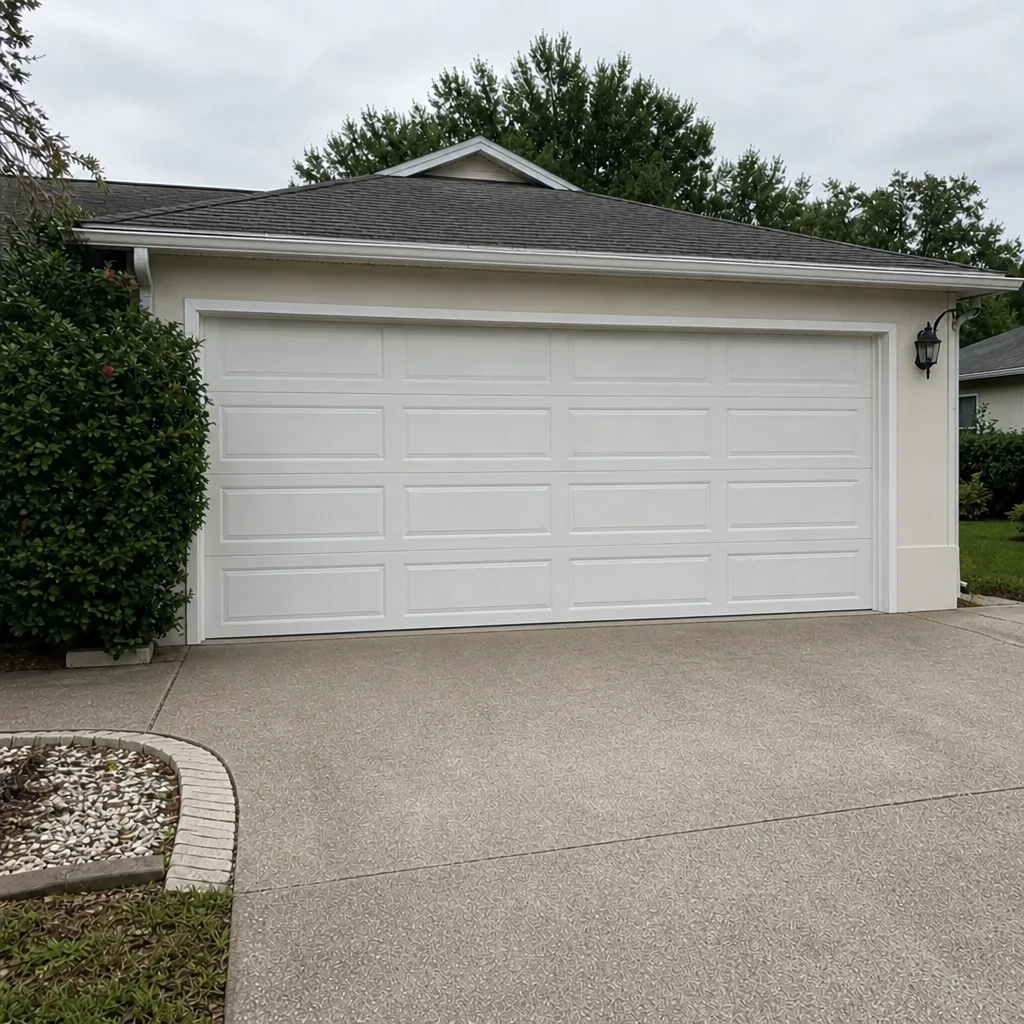
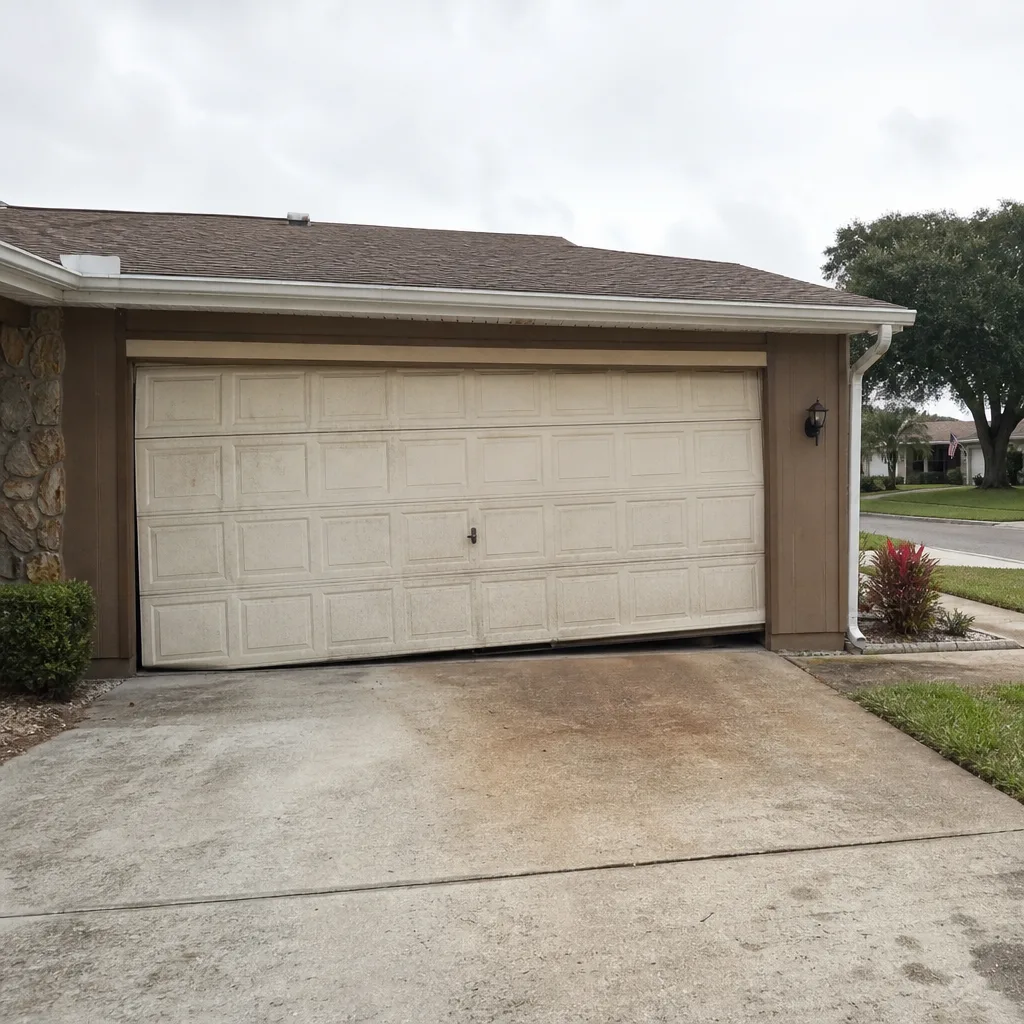
See the difference
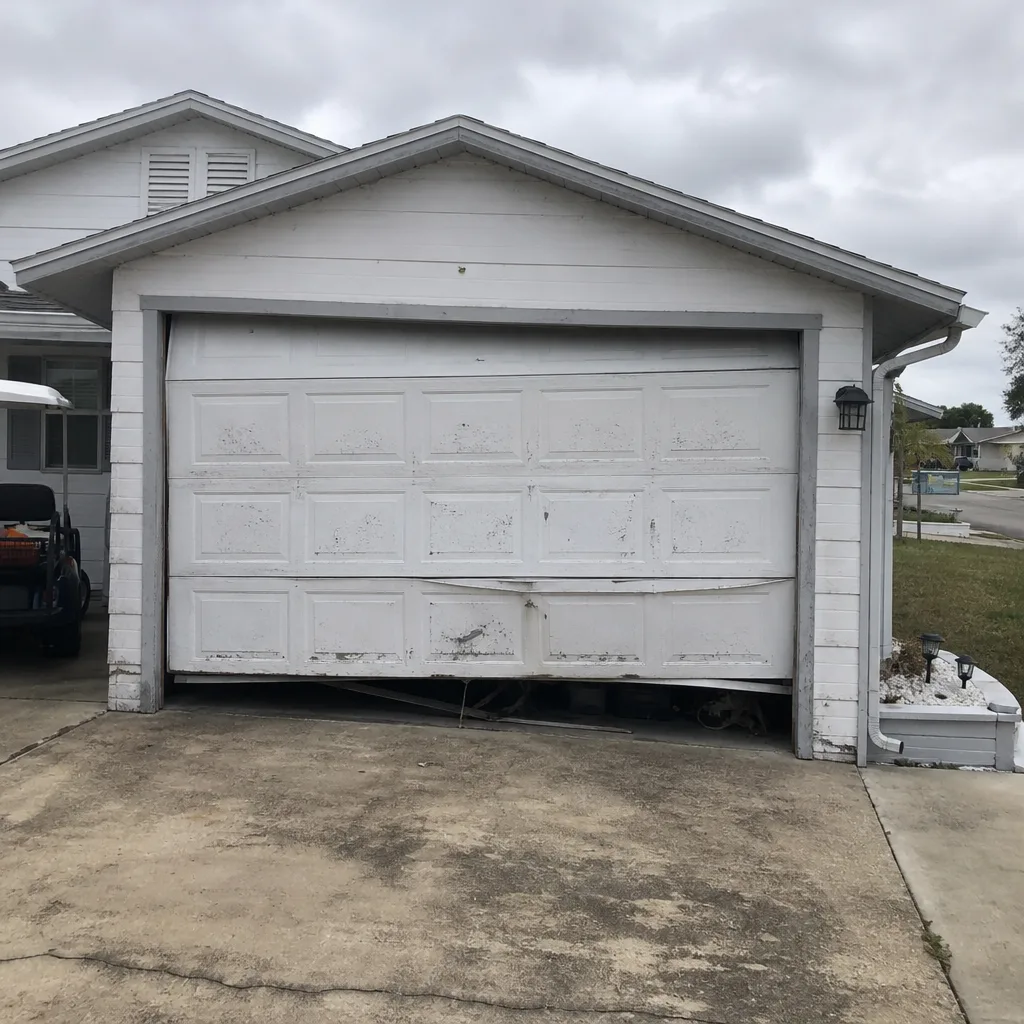 Before
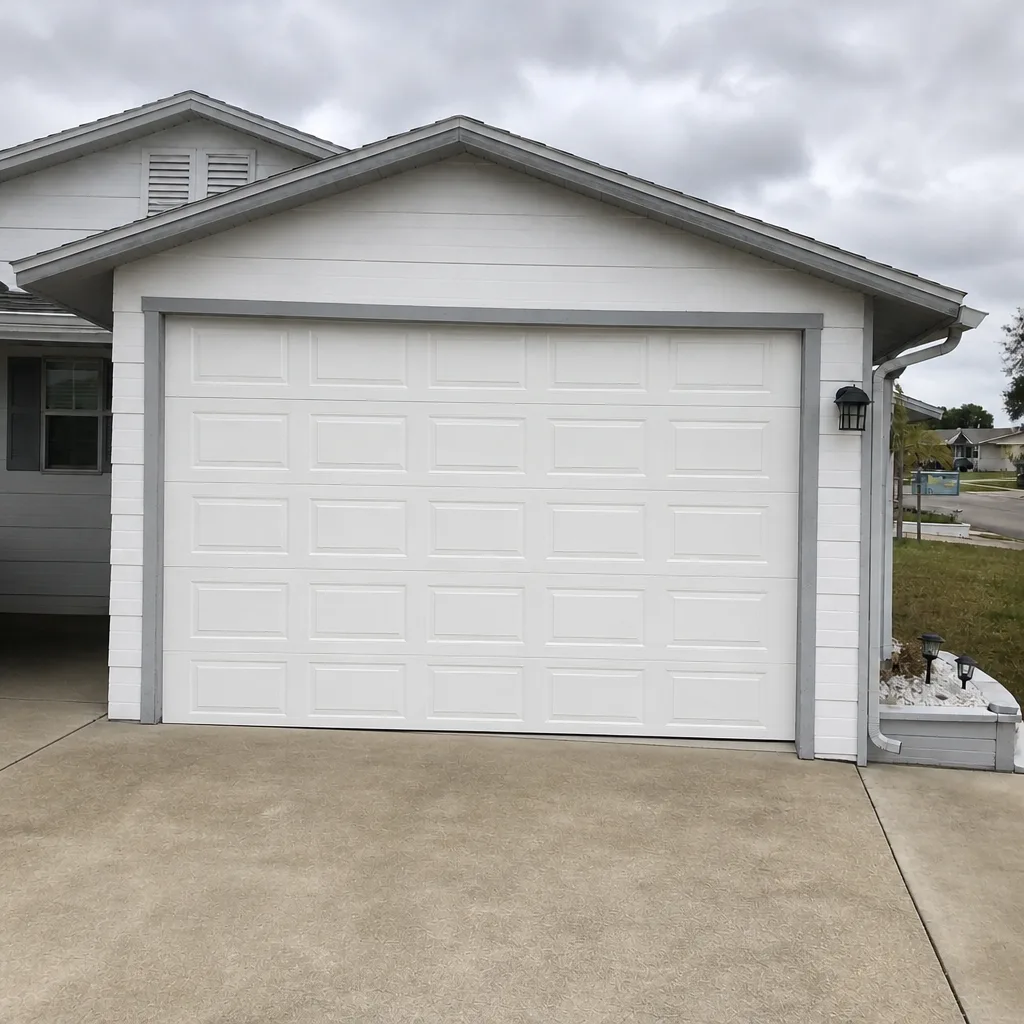 After
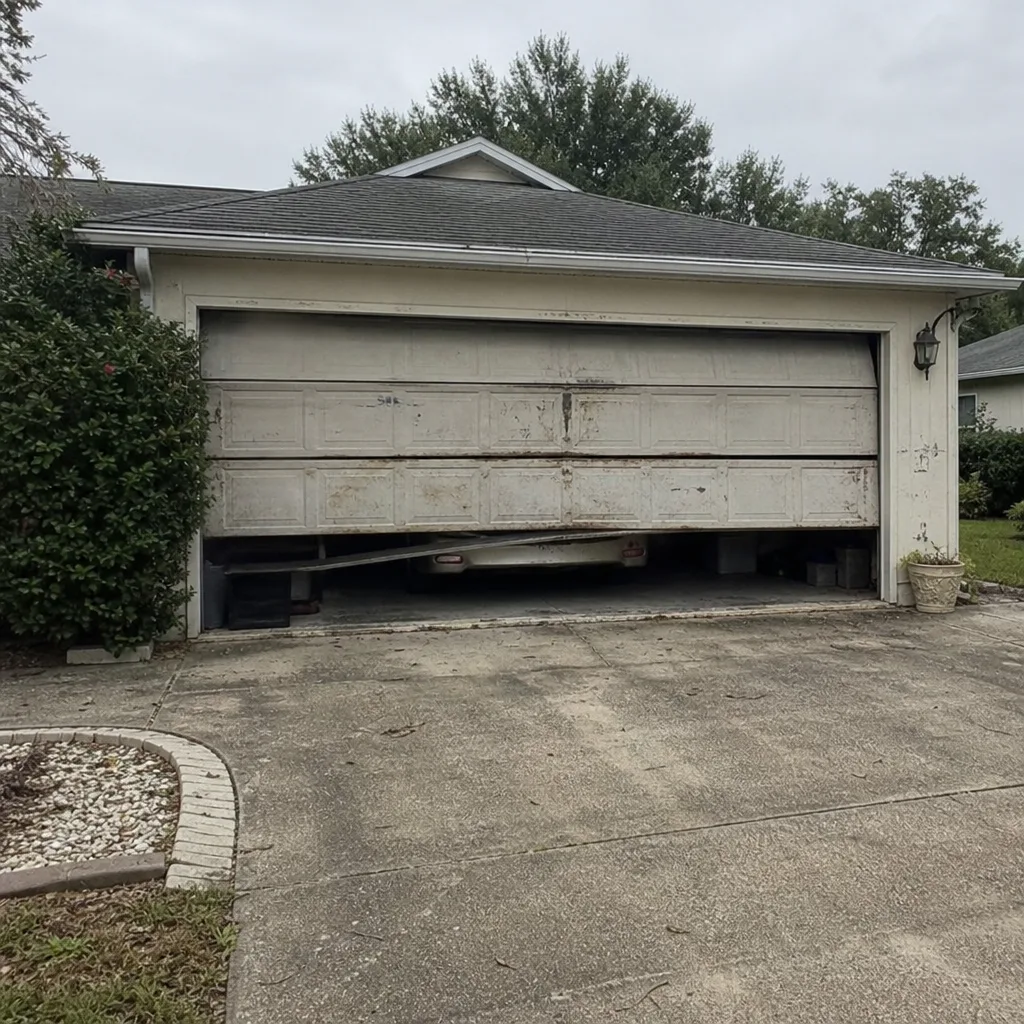 Before
 After
 Before
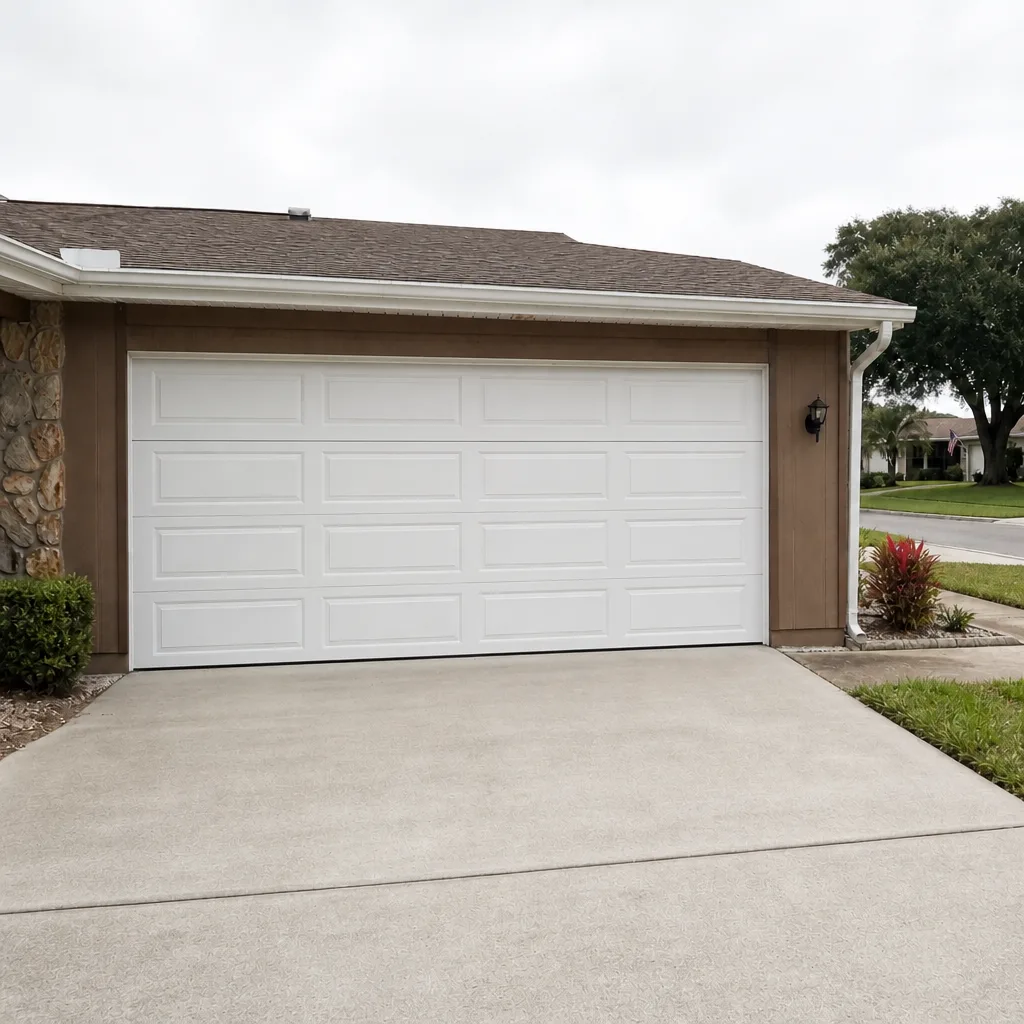 After
When to Call a Professional
Some jobs are fine to handle yourself, and some should be handed to a trained technician. Balance checks, lubrication, and weather seal inspection are all safe homeowner tasks. Spring work, cable work, and opener diagnostics that involve electrical components are not. If your door feels heavy, won’t stay open, sends out a loud bang, or reverses erratically, those are signs to call a specialist rather than probe further. Opener problems on a Chamberlain or Genie unit can also be trickier than they look, especially when the symptom points to the logic board or limit switch.
The Villages Garage Door Repair Pros offers free estimates in The Villages. Call (844) 628-1795. We answer 24/7, and fast dispatch runs from 7am to 7pm, Sunday through Friday. Our technicians are certified to work on eight major brands and our spring work is handled by specialists, so you’re not handing a hazardous repair to someone learning on the job. One call covers repair, opener, or a new door installation, and the price is quoted and agreed before any work begins.
Frequently Asked Questions
Inspect it every quarter and lubricate monthly if your door cycles 8-10 times a day, which is common for households where residents are home during the day. A twice-a-year checklist is built for lower-use homes and won’t catch the faster wear that comes with a high daily cycle count.
Springs wear on cycles, not on the calendar. If your door opens and closes more times a day than your neighbor’s, your springs are accumulating fatigue faster and will typically fail sooner. It’s a usage difference, not a defect, and it’s the main reason a cycle-adjusted inspection schedule matters in The Villages.
A silicone-based spray or white lithium grease holds up better in Central Florida’s heat than light household oil and won’t collect sand. Keep tracks mostly dry and lubricate rollers, hinges, and spring surfaces lightly. Call (844) 628-1795 if you’re not sure which parts to treat.
Florida heat breaks down rubber and vinyl faster than cooler climates do, and the concrete-paver driveways common on many Villages homes add roughness that can wear a seal unevenly. Check the seal every quarter and replace it as soon as it hardens or cracks.
No. Torsion and extension springs are under heavy tension and can cause serious injury if released incorrectly. Note the symptoms, leave the door closed, and call a professional for spring repair rather than attempting it yourself.
The written estimate sets the final price. We quote the job and agree on it with you before any work starts, so you’re not looking at an invoice that’s grown beyond the number you approved. Call (844) 628-1795 for a free estimate in The Villages.
The Bottom Line
A garage door maintenance checklist for The Villages works best when it’s built around your actual cycle count, not a fixed calendar. Inspect quarterly if you cycle the door 8-10 times a day, lubricate monthly with a product that survives Florida heat, check your bottom seal for paver-driven wear, watch for rust at the springs, hinges, and tracks, and log everything. Leave spring and cable work to a trained technician, and use the log to hand off an accurate history. Our technicians have up to 13 years of experience, we work on the brand you already have, and our spring replacement is done right and safely. If your door needs attention, call (844) 628-1795 for a free estimate. We answer 24/7, and fast dispatch runs from 7am to 7pm, Sunday through Friday.
Learn more about our services at The Villages Garage Door Repair Pros.
Written by the team at The Villages Garage Door Repair Pros.